

Last Updated 08/25/2026
EXCERPT- , July 2018
SECTION VII. Design and Construction Requirements.
E. Stormwater Management.
A stormwater management plan will be required for all approved site plans except as exempted by vote of the Planning Board. The design and maintenance of stormwater management systems shall conform to the appropriate Best Management Practices in the most recent edition of the NH Stormwater Manual. [Amended 3-21-2007] The following standards shall apply:
1. The USDA NRCS method TR- 55 Urban Hydrology for Small Watersheds shall be used for estimating stormwater runoff. (The Rational method is not acceptable for storm water analysis except for static analysis of storm drains.)
2. Low Impact Development practices, which are designed to mimic natural hydrology by reducing impervious surfaces and stormwater runoff and increasing groundwater recharge and pollutant removal, shall be used to the extent practicable unless the applicant can document infeasibility to the satisfaction of the Planning Board.
3. Stormwater runoff analysis shall include modeling of 2-year, 10-year, 25-year, 50-year and 100-year 24-hour rainfall events. The peak rate of runoff after development shall match the existing condition runoff for these events to the extent possible.
4. Stormwater management systems for roadways that consist primarily of catch basins, manholes and storm drain piping shall be designed to accommodate a 25-year, 24-hour storm event. Swales, ponds, bioretention and infiltration systems and other structures subject to erosion or potential flooding shall be designed to be stable during a 100-year storm event. Outlets from storm drainage systems shall be designed to be consistent with the NH Stormwater Manual and ensure discharge velocities do not cause erosion. The Planning Board may require energy analysis (hydraulic grade line analysis) of storm drain systems if deemed necessary.
5. A stormwater management plan shall be prepared for any use that will render an area impervious for more than 15% or 10,000 square feet of any lot.
6. Sites requiring a Site Specific Permit from the State of New Hampshire shall meet the stormwater management requirements of the NH DES Best Management Practices for Urban Stormwater Runoff, as amended (BMP USR) as well as the Green Book, as amended.
7. The peak rate of runoff discharged from the site shall not exceed the existing discharge rate. Existing patterns of runoff across site boundaries shall not be changed.
8. Stormwater management for the site shall emulate the natural hydraulics and conveyance system of the site to the extent feasible. Stormwater discharge from the site should occur at the natural drainage points as determined by topography and existing drainage patterns.
9. The Stormwater Management Plan for the development or redevelopment of the site shall be designed and stamped by a New Hampshire Registered Professional Engineer and be sized to be consistent with the NH Stormwater Manual requirements addressing the following:
10. Water Quality Volume (WQV) – The WQV is the amount of stormwater runoff produced during rain events that shall be treated through appropriate BMPs. The WQV represents the volume of runoff produced from the first one inch of rainfall falling on impervious surfaces. On average and on an annual basis, 90% of all runoff is produced by storms that produce one inch of rainfall or less.
11. Water Quality Flow (WQF) – represents the flow rate (expressed in cubic feet per second) associated with the runoff produced from the first 1 inch of rainfall and is typically used in combination with the WQV to size the water quality treatment practices such as rain pre-treatment devices.
12. Groundwater Recharge Volume (GRV) – As a means of maintaining the pre-development groundwater recharge volume from the site, the design shall include infiltration practices that enable groundwater that relates to the site’s hydrologic soil conditions.
13. Peak Flow Control for Flood Control Purposes – Consistent with NH DES requirements in the NH Stormwater Manual, drainage calculations shall be conducted to show that the post-development flow rates for all flows leaving the site does not exceed the pre-development flow rates for 2-year, 10-year, 25-year, 50-year and 100-year, 24-hour design storms. The applicant shall also demonstrate no adverse impact to downstream properties for proposed development within an identified 100-year floodplain.
14. Channel Protection – Post-development flow shall comply with one of the two following criteria:
a. If the runoff volume for a 2-year, 24-hour storm volume has not increased over the pre-development storm volume, then the post-development peak rate for a 2-year storm needs to be no greater than the pre-development peak flow.
b. If the runoff volume for the 2-year, 24-hour storm will increase then the post-development peak rate of flow for a 2-year, 24-hour storm shall be controlled to less than 50 percent of the peak flow rate of a 2-year, 24-hour storm or to the 1-year, 24-hour pre-development.
c. Effective Impervious Cover (EIC) – Calculate the effective impervious cover and determine if project falls under the “1065” rule. If not, confirm whether project will be required to prepare a pollutant loading and meet water quality requirements under antidegradation requirements.
d. Certification of No Adverse Effects on Downstream Drainage Facilities – The applicant’s engineer (registered professional engineer) shall determine and certify that any additional runoff produced from the proposed development will not have any adverse impact or overload any existing downstream facilities either on public or private property. The following certification statement shall be included on the site plan: “I certify that any additional runoff related to the proposed development on this site will not have any adverse effects on any open or closed, public or private downstream drainage facilities or natural resources, under the proposed design assumptions and considerations.”
e. Design Storm Frequency – The post-development peak flow rate shall not exceed the pre-development flow rate for 2-year, 10-year, 25-year, 50-year and 100-year storm events for all flows leaving the site.
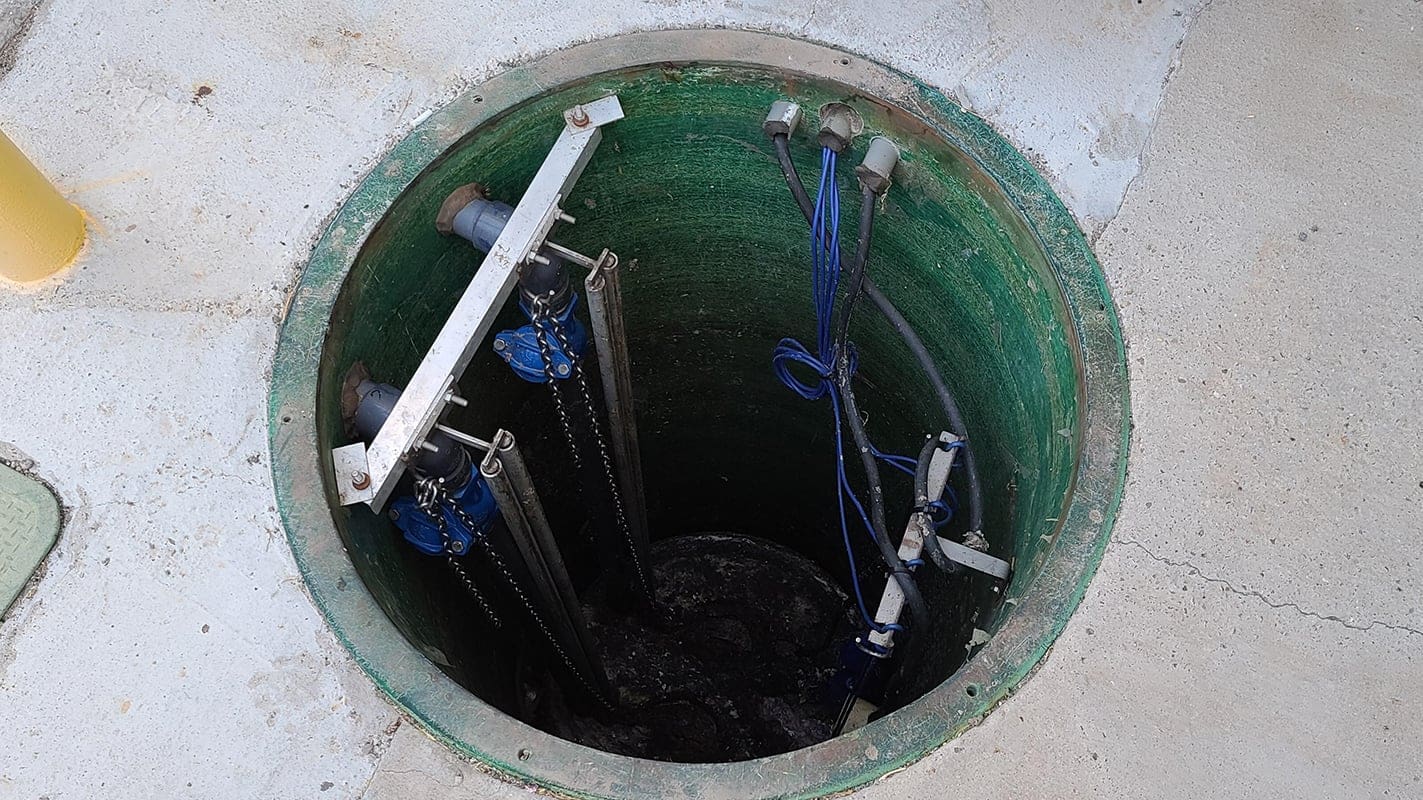
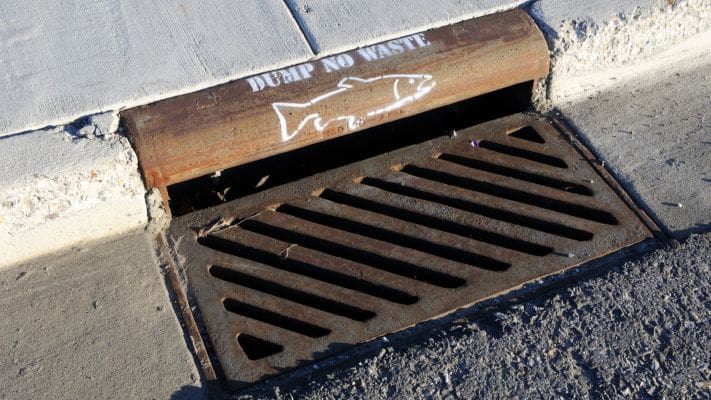
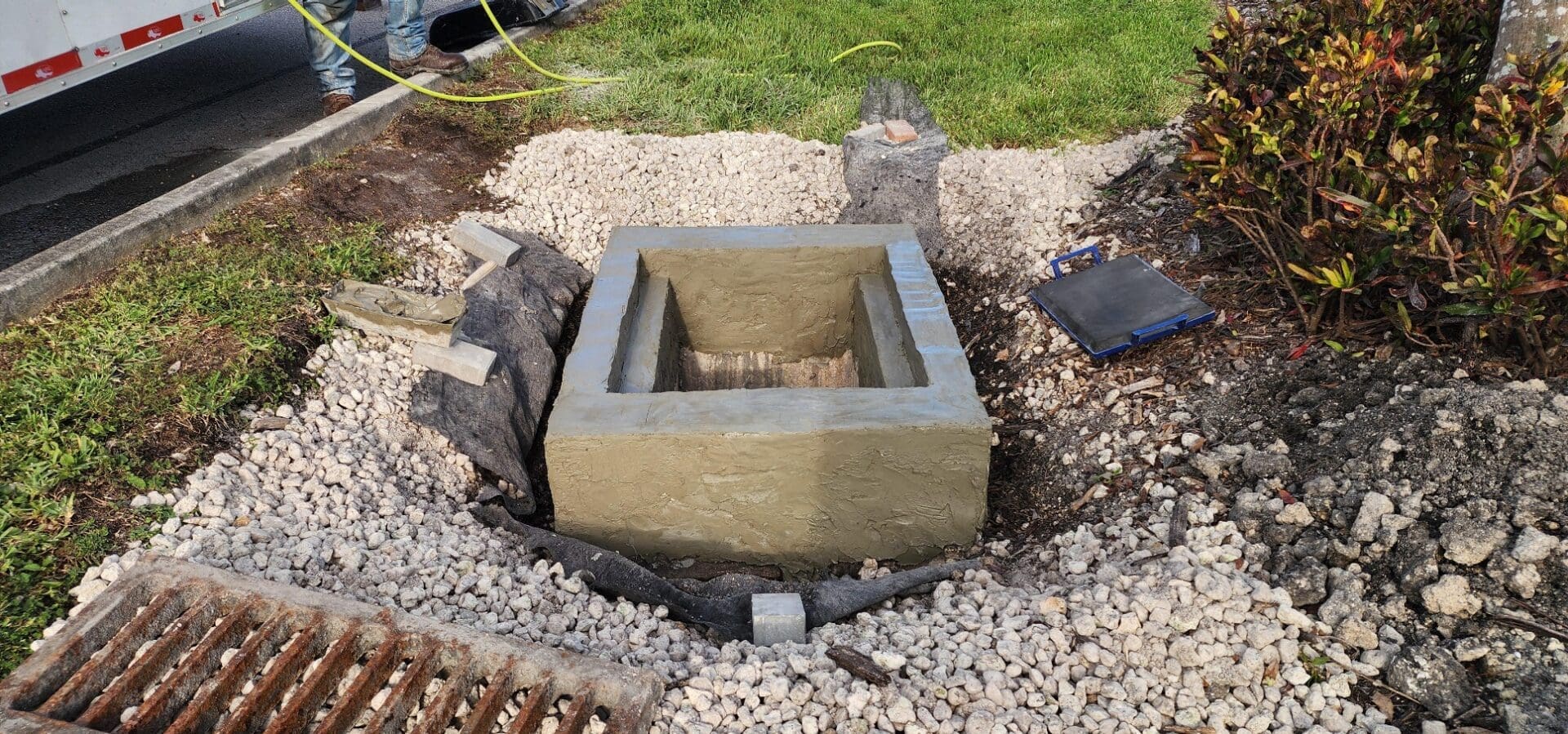
f. Catch Basins – All catch basins shall be designed with a minimum 3-foot sump. Commercial sites that have the potential for oil and gasoline spills shall have catch basins equipped with inverted hood outlets.
g. French or trench type drains shall not be allowed for the purpose of draining surface water from any street that will, or has the potential to, become the property of the Town.
h. Components of a stormwater system shall not be located within Town and/or State-owned Rights-of-Way (ROW) unless written approval is received from DPW and/or NH DOT. Proposed systems shall be located entirely on the lot of application. If multiple lots are included on the proposed site plan, the proposed stormwater system shall be contained on one lot. This lot must remain a buildable lot, and shall meet all requirements for a lot as outlined in the Town’s Zoning Ordinance. If an applicant demonstrates that locating the stormwater component or facility on one lot would not be the best solution to comply with all of the other requirements of this section, the applicant may request a waiver from this requirement.
15. The Planning Board may, at the applicant’s expense, have the stormwater management plans reviewed by an independent engineer designated by the Board.
16. The Planning Board shall, at the applicant’s expense, require phased inspections of the proposed stormwater management system. The frequency and extent of these inspections will be determined by and under the direction of the Director of Public Works.
17. A Stormwater Management Operation and Maintenance Plan (O&M Plan) that ensures adequate long term operation and maintenance of stormwater Best Management Practices (BMPs) shall be prepared for the stormwater management system. The plan shall establish the functional, financial and organizational mechanisms for ongoing operation and maintenance of the stormwater management system that ensures that it continues to function as designed. The plan shall address the following:
a. All components within land deeded to the Town for ROW shall be the responsibility of the Town once accepted by the Town, to include but not limited to; pipes, ditches, catch basins, shoulders, etc.
b. Closed pipes extending out from the Town ROW may be the responsibility of the Town once accepted by the DPW and Town and located within an easement running to the Town for that purpose. As-constructed plans must be provided to the Town before acceptance. [Amended 3-21-2007]
c. Stormwater Management Best Management Practices including bioretention and subsurface infiltration systems, surface treatment systems defined by the NH Stormwater Manual, including but not limited to: treatment swales, level spreaders, filter strips, rain gardens, pervious pavement, sand filters, dry ponds and wet ponds, outside of the ROW shall be the sole responsibility of and shall be maintained by the owner of the lot or by the owners’ association if applicable. If the system extends over more than one lot, then the applicant shall demonstrate which lot owner(s) shall be responsible for maintenance. [Amended 3-21-2007]
d. Maintenance of open drainage systems shall follow the recommendations of the Stormwater Management and Erosion and Sediment Control Handbook for Urban Developing Areas in NH, as amended. The Town reserves the right to correct deficiencies in such drainage systems resulting from improper or inadequate maintenance if, in the opinion of the Town, there is a threat to the safety or property of the general public from such deficiencies.
e. The O&M Plan shall include details of the inspection and maintenance requirements of the stormwater Best Management Practices. The plan shall identify the party(ies) responsible for implementing the O&M Plan once construction is complete.
f. Annual O&M Report and Certification – The property owner or association identified as responsible for the operation and maintenance of the stormwater management system shall provide a report on activities performed throughout the year and a certification that the system continues to function as designed. The annual report and certification shall be submitted to the Town Planner by December 31st of each year.
g. Those portions of a proposed stormwater management system not within Town ROW and proposed to be maintained by the Town shall be located within a drainage easement per Appendix C4 and shall be subject to acceptance by the Town. Privately maintained systems that do not connect to a Town maintained system are not required to be the subject of an easement. [Amended 3-21-2007]
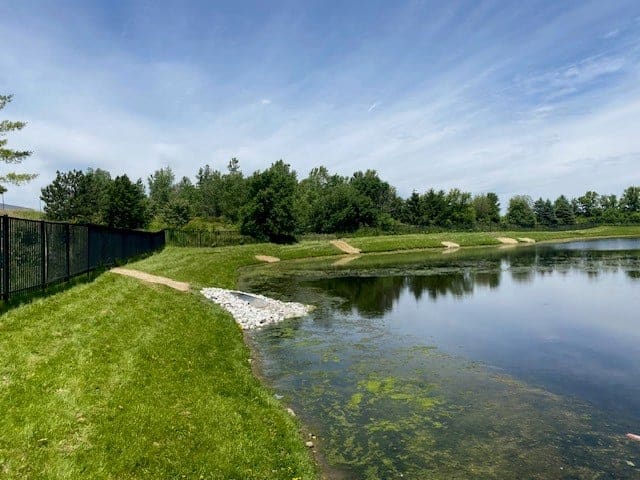
18. Easement widths and building setbacks for detention ponds shall be as follows:
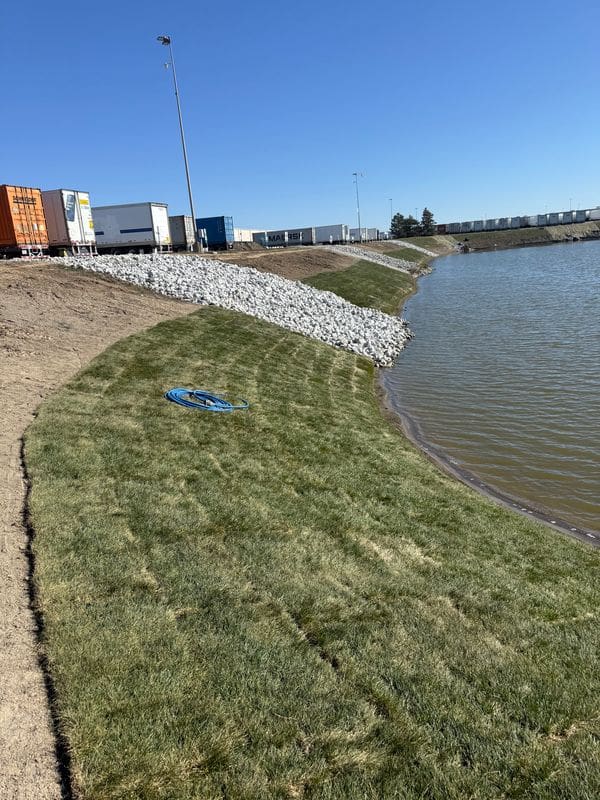
a. The easement area shall cover the entire pond and extend 5 feet from the toe of the exterior slope.
b. The easement area shall extend 5 feet from the emergency overflow.
c. Any pond not abutting the ROW shall provide a 15-foot wide access easement from the ROW to the pond.
d. The pond shall be set back from proposed or existing septic systems 75 feet, unless reduced by the State of New Hampshire, Department of Environmental Services Subsurface Systems Bureau.
View State Page
Frequently Asked Questions
What size project triggers a stormwater management plan in Hampton?
Any use that renders more than 15% of a lot impervious, or more than 10,000 square feet, whichever applies, requires a stormwater management plan. The plan must be prepared for all approved site plans unless the Planning Board votes to exempt it, and must be designed and stamped by a New Hampshire registered professional engineer.
What method does Hampton require for calculating stormwater runoff?
The USDA NRCS TR-55 Urban Hydrology for Small Watersheds method must be used to estimate runoff. The Rational Method isn’t acceptable for stormwater analysis, except for static analysis of storm drains.
Does Hampton require Low Impact Development practices for new projects?
Yes, to the extent practicable. LID practices, which mimic natural hydrology by reducing impervious surfaces and increasing groundwater recharge and pollutant removal, are required unless the applicant can document to the Planning Board’s satisfaction that they’re infeasible for the project.
What storm events does a Hampton stormwater analysis need to model?
Runoff analysis must model 2-year, 10-year, 25-year, 50-year, and 100-year 24-hour rainfall events, with post-development peak runoff matching pre-development conditions for each event to the extent possible. Roadway drainage systems using catch basins and piping need to accommodate a 25-year, 24-hour storm, while swales, ponds, and infiltration systems must remain stable during a 100-year storm.
What has to be included in a Hampton Stormwater Management Operation and Maintenance Plan?
The O&M Plan must identify the party responsible for implementing it after construction, detail the inspection and maintenance requirements for each BMP, and address which components fall under Town responsibility versus private ownership. BMPs like bioretention systems, rain gardens, and ponds outside the town right-of-way are the sole responsibility of the lot owner or owners’ association to maintain.
Does a Hampton property need to submit an annual report on its stormwater system?
Yes. The property owner or association responsible for the stormwater management system must submit an annual report detailing maintenance activities performed, along with certification that the system continues functioning as designed, to the Town Planner by December 31 of each year.
What easement requirements apply to detention ponds in Hampton?
The easement area must cover the entire pond and extend 5 feet beyond the toe of the exterior slope, plus 5 feet from the emergency overflow. Any pond not abutting the right-of-way needs a 15-foot-wide access easement connecting it to the right-of-way, and ponds must be set back at least 75 feet from septic systems unless the state reduces that distance.
The information on this page is provided for general informational purposes only and is not legal advice. Regulations change frequently — AQUALIS makes no warranty as to the accuracy or completeness of this content, and any reliance on it is at your own risk. Consult a qualified professional or your local regulatory authority to confirm requirements applicable to your specific property.