

Last Updated 07/24/2026
Stormwater Code: Excerpts from Essex, Virginia Code of Ordinance
The Federal Clean Water Act (CWA) was enacted in 1972 and directs the U.S. Environmental Protection Agency (EPA) to develop regulations and programs to improve the water quality of the nation’s waterways. The Act also requires states to identify and publish a list of waterways that are impaired due to stormwater runoff from existing development. Two of these are partially in Essex – Indian Brook and Sunderland Brook. The remaining streams are currently “unimpaired” and a key objective of the Town stormwater program is to maintain good water quality in those streams and to prevent those streams from becoming impaired.
EPA developed regulations in 1990 under the National Pollutant Discharge Elimination System (NPDES) that address the water quality impacts of stormwater. The regulations apply to land developments and “municipal separate storm sewer systems” (MS4’s). EPA imposed these stormwater regulations on large communities in 1990 (Phase I). In 1999, EPA expanded these mandates to smaller municipalities under their Phase II program. In Chittenden County, the affected MS4 Phase II entities are: Burlington, Colchester, Essex, Essex Junction, Shelburne, South Burlington, Williston, Winooski, the Burlington International Airport, the University of Vermont and the VT Agency of Transportation. Recently, the Towns of Milton, Jericho and Underhill have been added.
The objective of the USEPA Phase II program is for the municipalities to develop effective, site-specific storm water management programs that reduce the discharge of pollutants from the MS4s to the maximum extent possible. The Town of Essex has incorporated the following elements into its stormwater management program:
- Government coordination
- Legal authority and comprehensive planning
- Funding and Staffing
- Public education and participation
- Best management practices (BMP’s)
The Town’s program has the following goals:
- To reduce the discharge of pollutants to the maximum extent possible
- To protect water quality
- To satisfy the water quality and legal requirements of the Clean Water Act
Town of Essex Municipal Code: Chapter 10.20 – Stormwater
10.20.052 Discharge Prohibitions
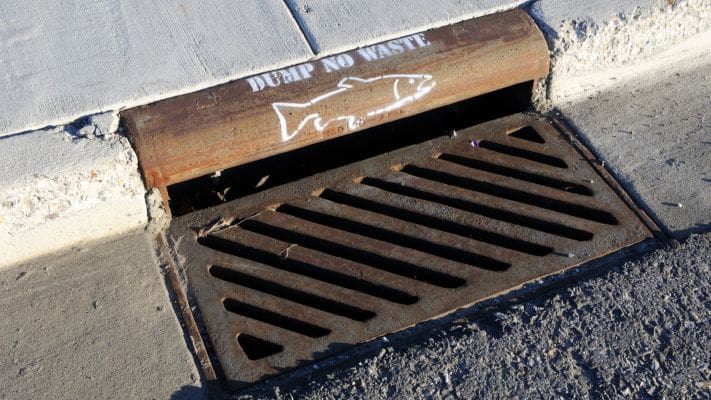
Prohibition of illicit discharges. No person shall discharge or cause to be discharged into the municipal storm drain system or watercourses any materials including, but not limited to, pollutants or waters containing any pollutants that cause or contribute to a violation of applicable water quality standards, other than storm water.
The commencement, conduct, or continuance of any illicit discharge to the storm drain system is prohibited except as described herein. The following discharges are exempt from discharge prohibitions established by this sub-chapter:
A. Flushing of water line or other potable water sources (except when a particular substance in the water is subject to control by State or federal regulation and then the discharge is still exempt if within the limits of accept-ability for the controlled substance).
B. Landscape irrigation or lawn watering (unless such watering results in a direct dis-charge and the discharge is identified as containing pollutants or chemicals that are required to be controlled by state or federal regulation).
C. Diverted stream flows.
D. Rising or pumped ground water, providing such groundwater is not contaminated or polluted.
E. Ground water infiltration to storm drains.
F. Foundation or footing drains (not including active ground water dewatering systems) containing no contaminants or pollutants.
G. Air conditioning condensation (except when control of a particular substance in the water is by federal regulation and then the dis-charge is still exempt if within the limits of acceptability for the controlled substance).
H. Uncontaminated springs.
I. Non-commercial washing of vehicles (unless such watering results in a direct dis-charge and the discharge is identified as containing pollutants or chemicals that are required to be controlled by state or federal regulation).
J. Natural riparian habitat or wetland flows.
K. Swimming pools (if de-chlorinated– typically less than one PPM chlorine and except when control of a particular substance in the water is by State or federal regulation and then the discharge is still exempt if within the limits of acceptability for the controlled substance).
L. Firefighting activities, not including the cleanup of spills or accidents involving contaminated material such as oil spills or hazardous wastes.
M. Any other water source not containing pollutants.
N. Discharges specified in writing by an authorized representative of the Town of Essex as being necessary to protect public health and safety.
O. Dye testing is an allowable discharge, if approved by the Town Engineer.
The prohibition shall not apply to any non-storm water discharge permitted under an NPDES permit, waiver, or waste discharge order issued for the dis-charge and administered under the authority of the US EPA, provided that the discharger is in full compliance with all requirements of the permit, waiver, or order and other applicable laws and regulations, and provided that written approval has been granted by the Town for any discharge to the storm drain system.
Prohibition of illicit connections. The construction, use, maintenance, or continued existence of illicit connections to the storm drain system is prohibited.
This prohibition expressly includes, without limitation, illicit connections made in the past, regardless of whether the connection was permissible under law or practices applicable or prevailing at the time of connection.
A person is in violation of this sub-chapter if the person connects a line conveying sewage, laundry waste or other forms of gray water to the MS4 or allows such a connection to continue.
10.20.053 Suspension of MS4 Access
Suspension due to illicit discharges in emergency situations. The Town may, without notice, suspend MS4 discharge access to a person when such suspension is necessary to stop an actual or threatened dis-charge that presents or may present imminent and substantial danger to the environment, or to the health or welfare of persons, or to the MS4 or waters of the United States. If the violator fails to comply with a suspension order issued in an emergency, the Town Engineer may take such steps as deemed necessary to prevent or minimize damage to the MS4 or water of the United States, or to minimize danger to persons.
A person commits a violation of this Ordinance if the person reinstates MS4 access to premises terminated pursuant to this section, without the prior approval of the Town Engineer.
10.20.054 Industrial or Construction Activity Discharges
Any person subject to an industrial multi-sector permit or other separately-issued storm water permit by the Town, State or EPA shall comply with all pro-visions of such permit. Proof of compliance with said permit may be required in a form acceptable to the Town prior to the allowing of discharges to the MS4.
10.20.056 Requirement to Prevent, Control, and Reduce Storm Water Pollutants
The Town has adopted best management practices for any activity, operation, or facility that may cause or contribute to pollution or contamination of storm water, the storm drain system, or waters of the United States through the State of Vermont Phase II Storm-water Permit. The owner or operator of a commercial or industrial establishment shall provide, at their expense, reasonable protection from accidental discharge of prohibited materials or other wastes into the municipal storm drain system or water-courses through the use of applicable structural and non-structural BMP’s. Further, any person responsible for a property or premise that is, or may be, the source of an illicit discharge may be required to implement, at said person’s expense, additional structural and non-structural BMP’s to prevent the further discharge of pollutants to the MS4. Compliance with all terms and conditions of a valid Multi-sector General permit authorizing the discharge of storm water associated with industrial activity, to the extent practicable, shall be deemed compliance with the provision of this section. These BMP’s shall be part of a storm water pollution prevention plan (SWPP) as necessary for compliance with requirements of the NPDES permit.
10.20.080 Storm Water Control, Operation and Maintenance.
10.20.081 Design
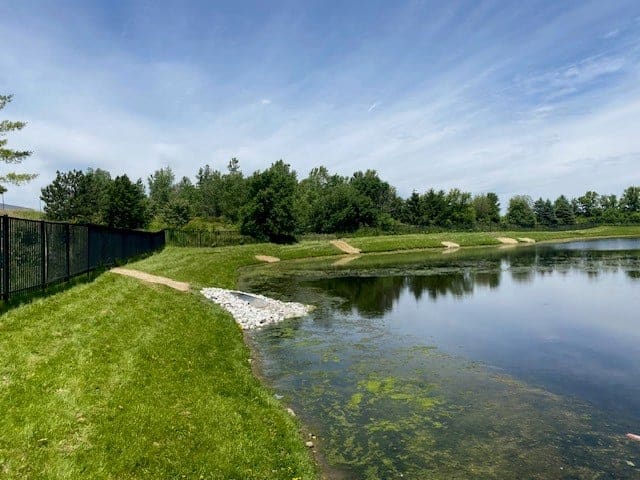
All storm water Best Management Practices (BMP’s) shall be designed to minimize the need for maintenance and reduce the chance of failure in accordance with the design guidelines outlined in the most current state storm water management manual.
Storm water easements and covenants shall be provided by the property owner for access for facility inspections and maintenance. Easements and covenants shall be recorded in the Town Land Records for any storm water discharge permit.
10.20.082 Routine Maintenance
All storm water BMP’s shall be maintained ac-cording to the measures outlined in the current state storm water management manual or as directed in approval documents issued by the Town specific to the permit.
10.20.085 Maintenance Inspections
Inspection programs. Inspection programs may be established on any reasonable basis including, but not limited to: routine inspections; random inspections; inspections based on complaints or other notice of possible violations; inspection of drainage basins or areas identified as higher than typical sources of sediment or other contaminants or pollutants; inspections of businesses or industries of a type associated with higher than usual discharges of contaminants or pollutants or with discharges of a type that are more likely than the typical discharge to cause violations of state or federal water or sediment quality standards or the NPDES storm water permit; and, joint inspections with other agencies inspecting under environmental or safety laws. Inspections may include, but are not limited to: reviewing maintenance and repair records; sampling discharges, surface water, groundwater, and material or water in drainage control facilities; and, evaluating the condition of drainage control facilities and other storm water treatment practices.
Right-of-entry for inspection. When any new drainage control facility is installed on private property, or when any new connection is made between private property and a public drainage control system, sanitary sewer or combined sewer, the property owner shall grant to the Town the right to enter the property at reasonable times and in a reasonable manner for the purpose of inspection. This includes the right to enter a property when it has a reasonable basis to believe that a violation of this chapter is occurring or has occurred, and to enter when necessary for abatement of a public nuisance or correction of a violation of this chapter.
10.20.086 Records of Installation and Maintenance Activities
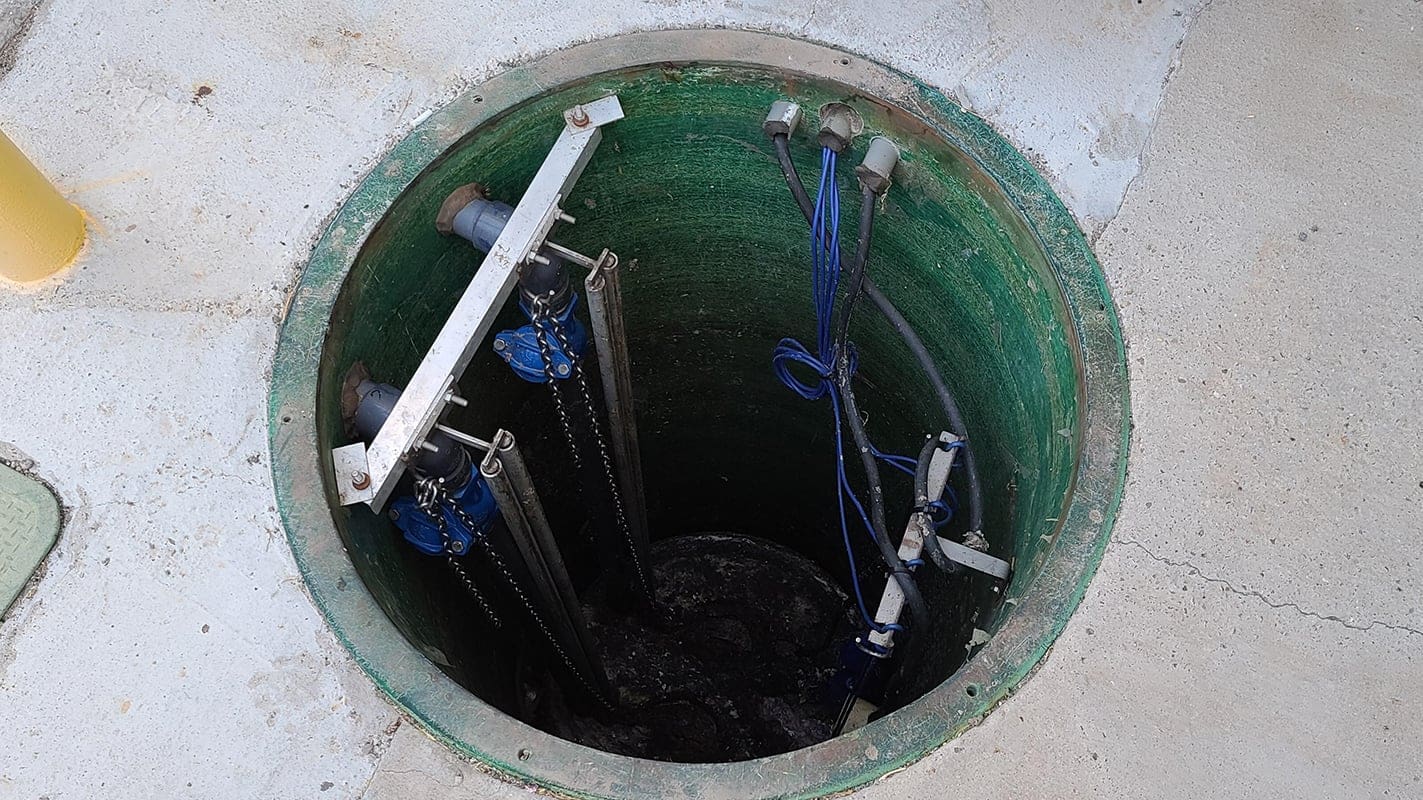
Parties responsible for the operation and maintenance of a storm water management system including but not limited to catch basins, pipes and treatment systems shall make records of the installation and of all maintenance and repairs, and shall retain the re-cords for at least 5 years. These records shall be made available to the Town during inspection of the facility and at other reasonable times upon request.
10.20.113 Notice of Violation
Whenever the Town finds that a person violates a prohibition or fails to meet a requirement of this Ordinance or any permit issued hereunder, the Town may order compliance by written notice of violation to the responsible person. Such notice may require without limitation: the performance of monitoring, analyses, and reporting; the elimination of illicit connections or discharges; that violating discharges, practices, or operations shall cease and desist; the abatement or remediation of storm water pollution or contamination hazards and the restoration of any affected property; payment of a fine to cover administrative and remediation costs; and, the implementation of source control or treatment BMP’s.
If abatement of a violation and/or restoration of affected property is required, the notice shall set forth a deadline within which such remediation or restoration must be completed. Said notice shall further advise that, should the violator fail to re-mediate or restore within the established deadline, the work will be done by the Town or its designated contractor and the expense thereof shall be charged to the violator.
View State Page
Frequently Asked Questions
What is stormwater compliance in the Town of Essex?
Stormwater compliance in Essex means following Chapter 10.20 of the Town Ordinance, which establishes minimum requirements for managing runoff from new development and existing properties. Essex is a Phase II MS4 community and must reduce the discharge of pollutants from its storm sewer system to the maximum extent possible under its NPDES permit.
Two waterways within Essex, Indian Brook and Sunderland Brook, are already identified as impaired due to stormwater runoff. A core goal of the Town’s stormwater program is to prevent additional streams from becoming impaired. Property owners play a direct role in that goal through maintaining their stormwater BMPs, preventing illicit discharges, and protecting watercourses that pass through their land.
Who is responsible for stormwater maintenance in Essex?
Before any permit that requires a stormwater management facility is issued, the property owner must execute a maintenance access agreement that is binding on all subsequent owners. A formal maintenance covenant must also be approved by the Town and recorded in the Town Land Records prior to final plan approval. The covenant must include a maintenance schedule specifying when and how often maintenance will occur, and plans for periodic inspections between scheduled cleanouts.
Owners and operators of commercial and industrial establishments are also required to implement structural and nonstructural BMPs to prevent prohibited materials from reaching the storm drain system, at their own expense. AQUALIS can manage your maintenance obligations, keep your records current, and help ensure your covenant requirements are being met.
What are the penalties for stormwater violations in Essex?
The Town of Essex may issue a written notice of violation requiring corrective action within a set deadline. If a responsible party fails or refuses to meet the requirements of their maintenance covenant, the Town may perform the required work after providing reasonable notice and bill the owner for all costs. If a facility becomes a danger to public safety or health, the Town provides 30 days to make repairs before stepping in to perform the work itself. Costs become a lien on the property in the same manner as unpaid taxes, with interest accruing from the first day of the first month following discovery of the violation.
Civil penalties are $500 per violation, with each day of continued violation constituting a separate offense. The Town may also recover all attorney’s fees, court costs, sampling and monitoring expenses, and restoration costs from the responsible person. Any violation of the ordinance is also declared a public nuisance, which gives the Town authority to abate it without waiting for the full enforcement process to run.
If you receive a notice of violation, you have 5 business days to file a written appeal with the Town Clerk or authorized representative. If the appeal is denied, you have 10 business days after that decision to correct the violation before the Town may enter the property and abate it at your expense.
How do I know if my Essex stormwater system is at risk of failure or safety violation?
Watch for these warning signs.
No maintenance covenant or access easement recorded. Every permitted stormwater facility in Essex requires both a recorded maintenance access agreement and a maintenance covenant with a maintenance schedule. If either is missing, that is an active compliance gap.
A spill or release occurred and was not reported. Non-hazardous releases must be reported to the Town Engineer by the next business day and confirmed in writing within 3 business days. Hazardous releases must be reported immediately. If a release occurred and was not reported, proactive disclosure is far preferable to the Town discovering it independently.
A watercourse passes through your property and has not been maintained. Debris, cut brush, pet waste, or structures that are encroaching on or blocking the natural flow of a stream on your property are violations independent of any stormwater facility maintenance obligation.
Maintenance and repair records are not on file. Essex requires at least 5 years of records for stormwater management facilities, available during inspection and upon request. Missing records are an active compliance gap.
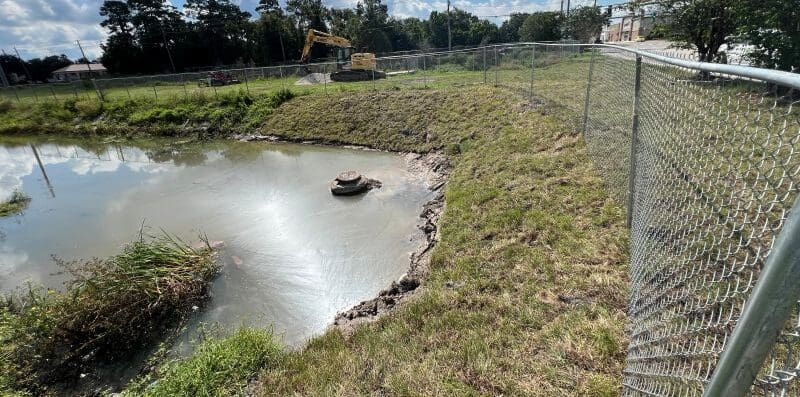
Water is not draining after rain. Standing water beyond the expected drawdown period for your BMP type suggests the facility is not performing as designed under the Vermont Stormwater Management Manual.
Recent property purchase. Both the maintenance covenant and the access easement run with the land. If you recently acquired a property with stormwater facilities and did not receive copies of the recorded documents or any maintenance history, an AQUALIS assessment can clarify what is required and confirm whether the facilities are in good standing.
The information on this page is provided for general informational purposes only and is not legal advice. Regulations change frequently — AQUALIS makes no warranty as to the accuracy or completeness of this content, and any reliance on it is at your own risk. Consult a qualified professional or your local regulatory authority to confirm requirements applicable to your specific property.