

Last Updated 08/25/2026
Prohibited Discharges
Violation of Water Quality Standard
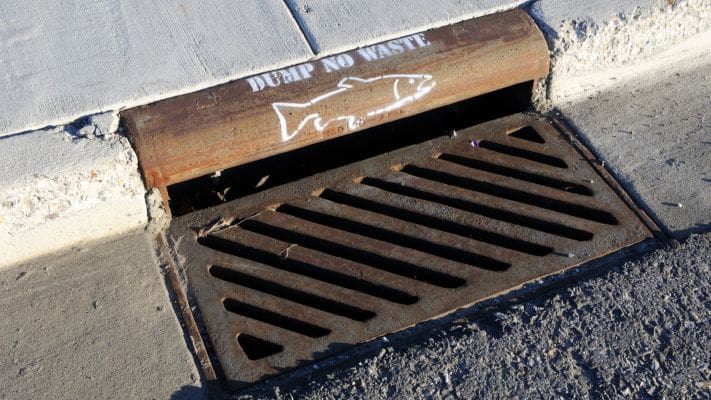
No person shall introduce or cause to be introduced into the MS4 any discharge that causes or contributes to causing the Town to violate a state surface water quality standard, the Town’s Phase II MS4 NPDES permit, or any state-issued discharge permit for discharges from its MS4.
Introduction of Prohibited Substances
The following discharges are specifically prohibited and are not meant to be all inclusive:
No person shall dump, spill, leak, pump, pour, emit, empty, discharge, leach, dispose, or otherwise introduce or cause, allow, or permit to be introduced any of the following substances into the MS4.
1. Any new or used motor oil, antifreeze, or other motor vehicle fluid;
2. Any industrial wastes;
3. Any hazardous waste, including hazardous household waste;
4. Any domestic sewage or septic tank waste, grease trap waste, or grit trap waste;
5. Any garbage, rubbish or yard waste;
6. Any wastewater from
- a commercial carwash facility;
- any vehicle washing, cleaning or maintenance at any new or used automobile, or other vehicle dealership, rental agency, body shop, repair shop, or maintenance facility; or
- from any washing, cleaning or maintenance of any business or commercial or public service vehicle, including truck, bus, or heavy equipment, by a business or public entity that operates more than two such vehicles;
7. Any wastewater from the washing, cleaning, de-icing, or other maintenance of aircraft;
8. Any wastewater from a commercial mobile power washer or from the washing or other cleaning of a building exterior that contains any harmful quantities of soap, detergent, degreaser, solvent, or any other harmful cleaning substance;
9. Any wastewater from any floor, rug or carpet cleaning;
10. Any wastewater from the wash down or other cleaning of pavement that contains any harmful quantity of soap, detergent, solvent, degreaser, emulsifier, dispersant, or any other harmful cleaning substance; or any wastewater from the wash down or other cleaning of any pavement where any spill, leak, or other release of oil, motor fuel, or other petroleum or hazardous substance has occurred, unless all harmful quantities of such released material have been previously removed;
11. Any effluent from a cooling tower, condenser, compressor, emissions scrubber, emissions filter, or the blowdown from a boiler;
12. Any ready-mixed concrete, mortar, ceramic, or asphalt base material or hydro-mulch material, or from the cleaning of commercial vehicles or equipment containing, or used in transporting or applying, such material;
13. Any runoff or wash down water from any animal pen, kennel, or fowl or livestock containment area;
14. Any water from a swimming pool, fountain or spa containing any harmful quantity of chlorine, muriatic acid or other chemical used in the treatment or disinfection of the swimming pool water or in the pool cleaning;
15. Any water from a water curtain in a spray room used for painting vehicles or equipment;
16. Any contaminated runoff from an auto salvage yard;
17. Any substance or material that will damage, block, or clog the MS4;
18. Any release from a petroleum storage tank, or any leachate or runoff from soil contaminated by a leaking petroleum storage tank, or any discharge of pumped, confined, or treated waste water from the remediation of any such petroleum storage tank release, unless it complies with state and federal standards and does not contain any harmful quantity of any pollutant;
19. Any pet waste from a commercial enterprise or livestock waste.
Litter of Urban Ponds, Lakes, Streams or River Banks
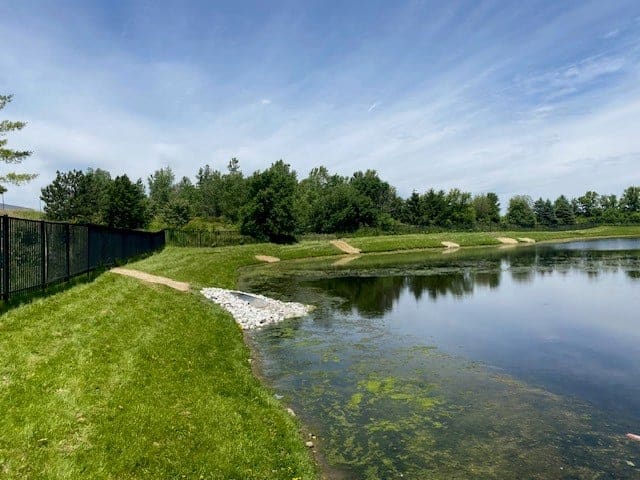
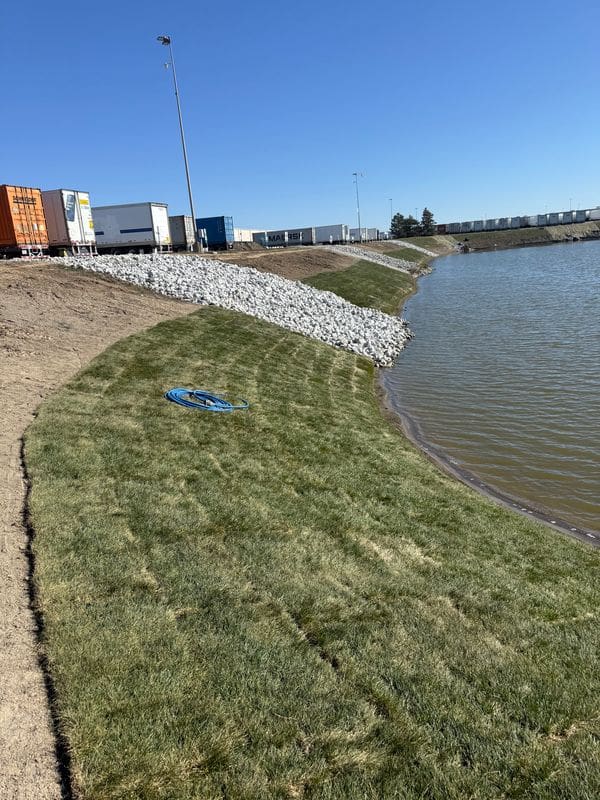
Any residential, commercial or industrial property boundary, located within 150 feet of any pond, lake, stream or river bank, shall assure that trash, debris, materials, containers, grass clippings, leaf and yard waste, wood chips, material used for cover or any such other material, does not litter this buffer area by means natural (wind or storm movement of material), by the careless discard of such material, or by any other means that displaces these objects from the owner’s property boundary to anywhere within this 150 foot buffer zone area.
Allowable Discharges
Notwithstanding any provisions to the contrary, the following types of discharges into the storm drain system are exempt from the prohibitions set herein:
- Watering of lawns, landscaping and gardens;
- Washing of personal motor vehicles by residents;
- Draining of water from swimming pools or spas, after chlorine content of such water according to a test kit, shows a zero reading of chlorine;
- Flushing of water lines or other discharges from potable water sources;
- Flows from firefighting activities;
- Managed minimal amounts of air conditioning condensation;
- Uncontaminated pumped groundwater;
- Discharges from rising ground waters, springs, and flows from riparian habitats and wetlands;
- Non-contact cooling water discharged in accordance with a valid NPDES permit.
Access and Inspection of Properties and Facilities
A. The representative of the Department of Public Works shall be permitted to enter and inspect properties and facilities at reasonable times as often as may be necessary to determine compliance with this ordinance
B. If a property or facility has security measures in force which require property identification and clearance before entry into its premises, the owner or operator shall make the necessary arrangements to allow access to representatives of the Department of Public Works.
C. The owner or operator shall allow the representative of the Department of Public Works ready access to all parts of the premises for the purposes of inspection, sampling, photography, videotaping, examination and copying of any records that are required under the conditions of a National Pollutions Discharge Elimination System Permit to discharge storm water.
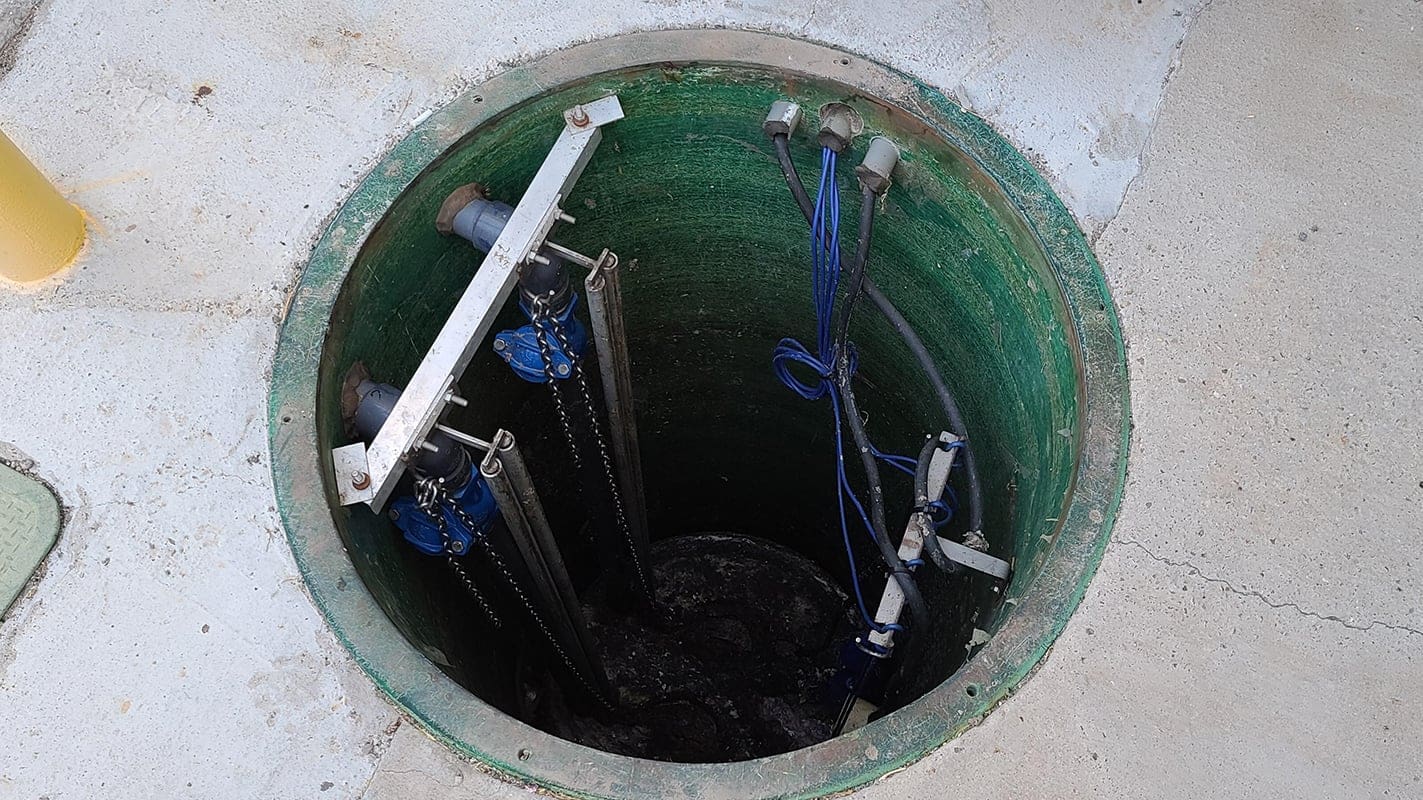
D. The Department of Public Works shall have the right to set up on any property or facility such devices as are necessary in the opinion of the Department of Public Works to conduct monitoring and/or sampling of flow discharges.
E. The Department of Public Works may require the owner or operator to install monitoring equipment and perform monitoring as necessary, and make the monitoring data available to the Department of Public Works. This sampling and monitoring equipment shall be maintained at all times in a safe and proper operating condition by the owner or operator at his/her own expense. All devices used to measure flow and quality shall be calibrated to ensure accuracy.
F. Any temporary or permanent obstruction to safe and easy access to the property or facility to be inspected and/or sampled shall be promptly removed by the owner or operator at the written or oral request of the Department of Public Works and shall not be replaced. The costs of clearing such access shall be borne by the owner or operator.
G. Unreasonable delays in allowing the Department of Public Works access to a facility shall be a violation of this ordinance. A delay shall be considered unreasonable if the delay exceeds 1 week (7 days), or any length of time if it is determined that the delay allowed the continuation of a discharge to the MS4 that is specifically prohibited by this chapter.
H. If the Department of Public Works has been refused access to any part of the premises from which stormwater is discharged, and the Department of Public Works is able to demonstrate probable cause to believe that there may be a violation of this ordinance, or that there is a need to inspect and/or sample as part of a routine inspection and sampling program designated to verify compliance with this ordinance or any order issued hereunder, or to protect the overall public health, safety, environment and welfare of the community, then the Department of Public Works may seek issuance of a search warrant from any court of competent jurisdiction.
Notification of Accidental Discharges and Spills
Notwithstanding other requirements of law, as soon as any person responsible for a facility, activity or operation, or responsible for emergency response for a facility, activity or operation has information of any known or suspected release of pollutants or non-stormwater discharges from that facility or operation which are resulting or may result in illicit discharges or pollutants discharging into storm water, the Town of Derry’s Separate Storm Sewer System, State Waters, or Waters of the U.S., said person shall take all necessary steps to ensure the discovery, containment, and cleanup of such release so as to minimize the effects of the discharge.
Any person identified above that is required to respond as described in the previous paragraph, or is otherwise required to provide notification to the State in accordance with RSA 146-A:5 (NH Oil Spillage in Public Waters) or RSA 147-A:11 (NH Hazardous Waste Management Act), shall also provide notification to the Town of Derry Department of Public Works.
Violations, Enforcement and Penalties
A. It shall be unlawful for any person to violate any provision or fail to comply with any of the requirements of the Town’s Storm Water Ordinance or these Regulations. Any person who has violated or continues to violate these provisions may be subject to the enforcement actions outlined in this section or may be restrained by injunction or otherwise abated in a manner provided by law. In the event the violation constitutes an immediate danger to public health or public safety, the Department of Public Works is authorized to enter upon the subject private property, without giving prior notice, to take any and all measures necessary to abate the violation and/or restore the property. The Department of Public Works is authorized to seek costs of the abatement.
B. Whenever the Department of Public Works finds that a violation of this ordinance has occurred, the Public Works Director or designee may order compliance by written notice of violation. The notice of violation shall contain:
- The name and address of the alleged violator;
- The address when available or a description of the building, structure or land upon which the violation is occurring, or has occurred;
- A statement specifying the nature of the violation;
- A description of the remedial measures necessary to restore compliance with this ordinance and a time schedule for the completion of such remedial action;
- A statement of the penalty or penalties that shall or may be assessed against the person to whom the notice of violation is directed; and,
- A statement that the determination of violation may be appealed to the Administrator by filing a written notice of appeal within five (5) days of service of notice of violation.
C. Such notice may require without limitation:
- The performance of monitoring, analyses, and reporting;
- The elimination of illicit discharges and illegal connections;
- That violating discharges, practices, or operations shall cease and desist;
- The abatement or remediation of stormwater pollution or contamination hazards and the restoration of any affected property;
- Payment of costs to cover administrative and abatement costs; and,
- The implementation of pollution prevention practices.
D. Appeal of Notice of Violation
Any person receiving a Notice of Violation may appeal the determination of the Department of Public Works. The appeal must be received by end of the business day at the office of the Administrator within five (5) calendar days from the date of the Notice of Violation. Filing an appeal does not relieve the owner from full compliance with remedial actions outlined in the Notice of Violation. Hearing on the appeal from the Department of Public Works shall take place within 30 days from the date of receipt of the notice of appeal. The decision of the Administrator shall be final.
E. Enforcement Measures After Appeal
If the violation has not been corrected pursuant to the requirements set forth in the Notice of Violation, then representatives of the Department of Public Works may enter upon the subject private property and are authorized to take any and all measures necessary to abate the violation and/or restore the property. It shall be unlawful for any person, owner, agent or person in possession of any premises to refuse to allow the government agency or designated contractor to enter upon the premises for the purposes set forth above.
F. Costs of Abatement of the Violation
– Within ten (10) days after abatement of the violation, the owner of the property will be notified of the cost of abatement, including administrative costs. The property owner may file a written protest objecting to the assessment or to the amount of the assessment within fifteen (15) days of such notice. If the amount due is not paid within thirty (30) days after receipt of the notice, or if an appeal is taken, within five (5) days after a decision on said appeal, the charges shall become a special assessment against the property and shall constitute a lien on the property for the amount of the assessment. Any person violating any of the provisions of this article shall become liable to the Town of Derry by reason of such violation.
G. Civil Penalties
In the event the alleged violator fails to take the remedial measures set forth in the notice of violation or otherwise fails to cure the violations described therein within five (5) days, or such greater period as the Department of Public Works shall deem appropriate, after the Director of Public Works or designee has taken one or more of the actions described above, the Public Works Director may impose a penalty not to exceed $1,000 (depending on the severity of the violation) for each day the violation remains unremedied after receipt of the notice of violation.
H. Criminal Penalties
For any wanton or malicious violations of the Storm Water Ordinance or the Rules & Regulations adopted pursuant to the authority stated in this ordinance, the Director of Public Works may issue a citation to the alleged violator requiring such person to appear in court to answer charges for such violation. Upon conviction, such person shall be shall be guilty of a misdemeanor if a natural person, or guilty of a felony if any other person and may be punished by a fine not to exceed $1,000 for each day the violation has occurred, or imprisonment or both. Each act of violation and each day upon which any violation shall occur shall constitute a separate offense
I. Remedies Not Exclusive
The remedies listed in these Regulations are not exclusive of any other remedies available under any applicable Federal, State or local law and the Town of Derry may seek cumulative remedies.
The Town of Derry may recover attorney’s fees, court costs, and other expenses associated with enforcement of this ordinance, including sampling and monitoring expenses.
View State Page
Frequently Asked Questions
What commercial wastewater discharges are prohibited in Derry?
The list is extensive and specifically targets commercial activities: wastewater from commercial car washes, vehicle dealerships, rental agencies, body shops, and repair facilities; washing or maintenance of aircraft; commercial mobile power washing or building exterior cleaning containing soap or solvents; and cleaning of ready-mixed concrete, mortar, or asphalt equipment. Businesses operating more than two service vehicles are specifically called out for vehicle washing and maintenance wastewater.
Are there restrictions on pavement washing and pressure washing for Derry businesses?
Yes. Wastewater from washing down pavement is prohibited if it contains harmful quantities of soap, detergent, solvent, or degreaser, and pavement cleaning is also restricted wherever a spill or leak of oil, fuel, or another hazardous substance occurred, unless all of that material has already been removed. Wastewater from floor, rug, or carpet cleaning is prohibited as well.
What is Derry's buffer zone rule for properties near ponds, lakes, or rivers?
Any residential, commercial, or industrial property within 150 feet of a pond, lake, stream, or riverbank must prevent trash, debris, grass clippings, leaf and yard waste, and similar materials from littering that buffer area, whether through wind, storm movement, careless discard, or any other means.
What discharges are exempt from Derry's stormwater prohibitions?
Exemptions include lawn and garden watering, residents washing personal vehicles, swimming pool or spa drainage once chlorine tests at zero, water line flushing, firefighting flows, managed air conditioning condensation, uncontaminated pumped groundwater, and non-contact cooling water discharged under a valid NPDES permit.
Can Derry require a property owner to install stormwater monitoring equipment?
Yes. The Department of Public Works can require an owner or operator to install and maintain monitoring equipment at their own expense, calibrated for accuracy, and to make the resulting data available to the department upon request.
How does Derry's stormwater violation appeal process work?
A property owner who receives a notice of violation has five calendar days to file a written appeal with the Administrator. Filing an appeal doesn’t pause the remedial action deadlines in the original notice, and a hearing on the appeal must take place within 30 days of the appeal being received, with the Administrator’s decision considered final.
What penalties can Derry impose for an uncorrected stormwater violation?
If remedial measures aren’t taken within five days of the notice of violation, the Public Works Director can impose a civil penalty up to $1,000 per day the violation remains unremedied. Wanton or malicious violations can also lead to criminal citations, punishable by fines up to $1,000 per day, imprisonment, or both, with each day of violation treated as a separate offense.
The information on this page is provided for general informational purposes only and is not legal advice. Regulations change frequently — AQUALIS makes no warranty as to the accuracy or completeness of this content, and any reliance on it is at your own risk. Consult a qualified professional or your local regulatory authority to confirm requirements applicable to your specific property.