

Last Updated 07/28/2026
The City of Wilmington has enacted a Stormwater Ordinance in to comply with the Federal Clean Water Act. The City of Wilmington is the permitting authority for all land disturbing activities and requires the land owner to maintain all on-site stormwater control facilities and all open space areas (e.g. parks or “green” areas) required by the approved stormwater control plan. The City of Wilmington will only provide construction permits to projects that establish a plan to manage stormwater runoff occurring during the construction process. Stormwater user fees will be calculated and collected by the city. Credits are available for properties that engage in stormwater best management practices and/or maintain stormwater management facilities. The City of Wilmington under the NPDES program, also has the authority to inspect properties for noncompliance and can issue a notice of violation (NOV) for any deficiency or infraction onsite. Property owners are responsible for the maintenance of any stormwater facilities or practices located on the property. The City of Wilmington has the authority to inspect stormwater facilities and practices in order to ascertain that they properly maintained and functioning.
1.1 Overview
The City of Wilmington’s integrated storm water management program addresses the storm water needs of the City while protecting its water resources. The major goal of this program is to reduce the amount of pollutants discharged into the surface waters including rivers and creeks. These pollutant discharges occur as a consequence of storm water run-off, combined sewer overflows and wastewater treatment plant discharges. The City is engaged in several management activities to mitigate the impact of these pollutant loads on rivers, including pre- and post-construction storm water management, watershed planning and protection, waste water treatment plant improvements, reduction of volume and frequency of combined sewer overflows, and surface water quality enhancement efforts through the promotion of storm water quality and quantity management utilizing best management practices.
1.2 Storm Water User Fee
The City of Wilmington (City) implemented a Storm Water Charge, effective January 1, 2007, pursuant to City Code Section 45-53, to provide a designated source of revenue for the City’s storm water management, Combined Sewer Overflow (CSO) mitigation activities, and surface water quality management activities. These activities benefit everyone in the City by protecting the City streets and properties from flooding, pooling, erosion, pollution problems, property damage, and also enable the City to comply with federal and state regulatory requirements. The key objective of the storm water user fee program is to facilitate equitable recovery of the City’s integrated storm water management costs from all the parcels within the City’s limits. As it is not feasible for the City to measure the actual storm water runoff that occurs from a parcel, the City has defined a storm water user fee based on a parcel’s estimated effective impervious area. The impact of a parcel on the City’s storm water and CSO mitigation operations is quantified using a surrogate measure such as a parcel’s impervious area from which storm water runoff occurs. Impervious area typically refers to any hard and compacted surface area including paved areas, hard undeveloped surfaces, buildings, rooftops, driveways, walkways, decks and patios, compacted grassed areas and parking lots. The City determines the impervious areas of parcels in two ways depending on the use of the parcel.
Residential Parcels: For all the residential parcels, which include the single family (SWR) and the multifamily residential (SWM) parcels, the impervious area is determined based on the actual main floor, attached area, and detached structure square footage data recorded in the County’s tax assessment system. Based on the impervious area determined, SWR and SWM parcels are assigned to one of the four tiers of impervious area listed in Table 1, in Appendix A.
Non Residential and Condominium Parcels: The impervious area is estimated for all non-residential parcels including condominiums and multi-family apartments, by multiplying a parcel’s gross area by the runoff factor assigned to each non-residential parcel. The parcel’s gross area is obtained from New Castle County’s (County) Tax assessment systems. The City first assigns a non-residential parcel to one of eleven non-residential storm water classes based on that parcel’s land use code. The land use code is assigned by New Castle County, based on the occupancy permit that is issued to the parcel. Tables 2 and 3 in Appendix provide a list of the non-residential storm water classes and the corresponding runoff.
1.3 Purpose
In conjunction with the implementation of the storm water charge, the City has established a storm water credits and fee adjustments appeals program. Storm Water Credits: The purpose of the storm water credits program is to enable non-residential parcel owners to seek reduction in storm water charges, if specific value added onsite storm water control measures have been implemented. The onsite storm water management measures need to significantly reduce the volume of runoff into the City’s sewer system and/or enhance the water quality in the surface water bodies into which a parcel’s runoff discharges.
Storm Water Credits are associated with the construction, operation, and maintenance of privately owned storm water management facilities and/or non-structural best management practices that complement the City’s storm water management efforts and support the City’s CSO mitigation, storm water management and surface water quality protection activities. However, in the case of a credit application for a cemetery that has entered into a Cemetery Storm Water Management Easement Agreement with the City, the storm water management facilities and/or non-structural best management practices need not be privately owned to be eligible for a credit.
The purpose of the fee adjustments appeals process is to enable customers to seek fee adjustments for inaccurate assignment of storm water classification and/or inaccurate representation of a parcel’s gross parcel area and/or impervious area.
2.2 Credit Policies
The system of credits defined in this Storm Water Credits and Fee Adjustments Appeals Manual (manual) is governed by the following policies:
2.2.1 Credit Application
Only non-residential parcels are eligible to apply for storm water credits. Consequently, parcels assigned to the Single Family Residential and Multi-Family Residential storm water classes with charge codes of SWR1, SWR2, SWR3, SWR4, SWM1, SWM2, SWM3, or SWM4 are not eligible to apply for credits. The Storm Water Credits Application (See Form D in the Appendix) and all supporting documentation must be filed by the applicant in writing, with the Commissioner of the Department of Public Works. The credit request may be filed any time but adjustments, if any, will be effective as stated in 2.2.9.
2.2.2 Types of Credits Quantity Credits:
Quantity Credits are available to those properties that control storm water runoff entering into the City’s combined sewer system, separate storm system or surface water system (rivers, streams, etc).
Quality Credits: Quality Credits are available on a case-by-case basis for parcels that implement BMPs to effectively control pollutants in the runoff and to enhance water quality.
NPDES Credits: NPDES credits are available for parcels that are governed by either an active “NPDES Individual Permit” or an active “NPDES General Permit”, issued by DNREC, and are in full compliance with the permit requirements.
A parcel may be eligible for and can apply for one or more types of credits. However, the maximum aggregate storm water credit for any individual parcel cannot exceed 70% of the ESU Factor estimated for the parcel.Credits will not be provided for storm water management systems that are under construction and/or are not fully functional and/or are not properly maintained, or parcels that are not in compliance with Individual or General NPDES permit requirements.
2.2.3 Quantity Credits
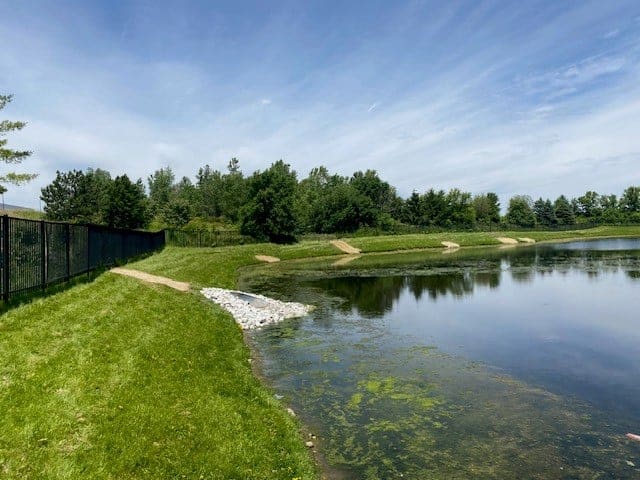
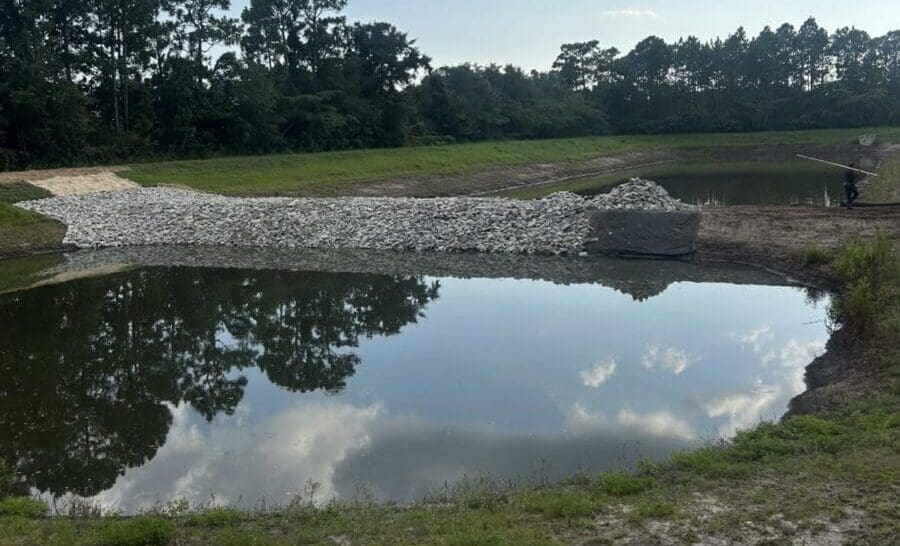
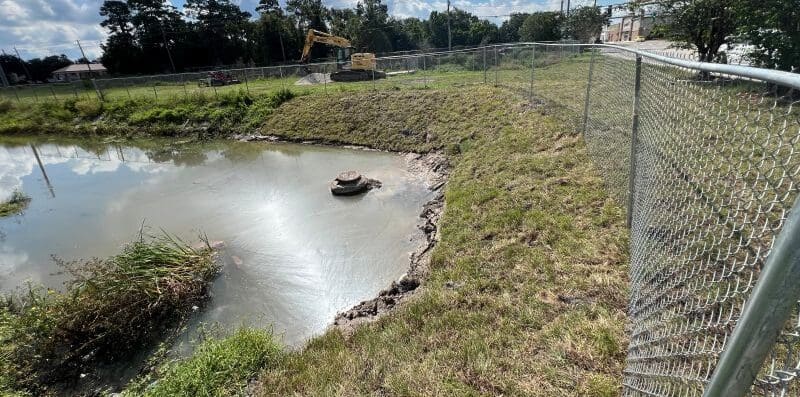
Quantity Credit is available to parcels that employ onsite structural storm water management measures such as retention or detention ponds, or other non-structural practices to manage storm water runoff. The applicant must unequivocally document and demonstrate the existence of fully functioning, privately owned and privately maintained storm water management facilities. In the case of a credit application for a cemetery that has entered into a Cemetery Storm Water Management Easement Agreement with the City, the storm water management facilities need not be privately owned to be eligible for a credit.
Quantity Credits may be provided if the parcel deploys stormwater management practices that meet one of the following technical criteria:
- Credits may be provided to parcels where the post-development peak storm water discharge rates do not exceed the pre-development peak discharge rates for the 2, 10, and 100 year frequency storm events. The allowable credit is as follows:
- Facilities designed for a 2 and 10 year Storm: up to a 35% reduction
- Facilities designed for a 2, 10, and 100 yr Storm: up to a 50% reduction
The design standards and criteria of the storm water management structures must conform to the guidelines and design standards defined in Section 10.0 of the Delaware Sediment and Stormwater Regulations of Title 7 Natural Resources & Environmental Control Administrative Code issued by the Division of Soil and Water Conservation, of DNREC.
If quantity credits are provided, the City may at any time revoke the credits if the storm water management systems are found to be poorly maintained and/or non-functional.
2.2.4 Quality Credits
Water Quality Credits are available to parcels on a case-by-case basis, if the City determines that the parcel has implemented onsite Best Management Practices that significantly minimize pollutant levels in the storm water runoff. Water Quality Credits may be provided if the parcel deploys stormwater management practices that meet one of the following technical criteria: • A maximum of up to 25% credit will be provided for areas that have BMPs to infiltrate the first inch of precipitation. • A maximum of up to 10% credit will be provided for parcels that implement BMPs that produce a total suspended solid removal rate of greater than 80% of suspended solids in runoff from impervious areas during a 2 inch storm event. If water quality credits are provided, the City may at any time revoke the credits for non-compliance of BMP standards. In the case of a credit application for a cemetery that has entered into a Cemetery Storm Water Management Easement Agreement with the City, the storm water management facilities and/or nonstructural best management practices need not be privately owned to be eligible for a credit.
2.2.5 NPDES Credit:
NPDES Credits are available to parcels that possess a NPDES storm water permit that is approved and issued by DNREC. The allowable credit is as follows:
- Parcels with “NPDES Individual Permit” are eligible for a 10% Credit. These parcels must be in full compliance with the permit requirements including inspection, sampling, and other monitoring requirements for all the designated storm water outfalls. The parcel should not have had any violations during the preceding 24-month period, prior to the issuance or renewal of the credit.
- Parcels with “NPDES General Permit” are eligible for a 5% Credit. These parcels must be in full compliance with the permit requirements including inspection, pollution plan, and other monitoring requirements for all the designated storm water outfalls.
The parcel should not have had any violations during the preceding 24-month period, prior to the issuance or renewal of the credit. The parcel should possess an approved Individual or General NPDES permit with defined Monitoring and Stormwater Management Plan (SMP) requirements. A Conditional “No Exposure” Exclusion certification will not qualify for a NPDES credit.
2.2.6 Maximum Credits
The maximum allowable storm water credits for Quantity Reduction (Quantity Credits) is 50% of the ESU Factor estimated for the parcel seeking the credit. The maximum allowable storm water credits for Quality Control (Quality Credits) is 25% of the ESU Factor. The maximum allowable storm water credits for NPDES lndividual Permit is 10% and for NPDES General Permit is 5%, of the ESU Factor. However, the maximum aggregate storm water credit for any individual parcel cannot exceed 70% of the ESU Factor estimated for the parcel.
View State Page
Frequently Asked Questions
Can my Wilmington property get a stormwater fee credit for on-site BMPs?
Yes, if you own a non-residential parcel. Wilmington offers Quantity Credits, Quality Credits, and NPDES Credits, and a single parcel can qualify for more than one type at once, though the combined total can’t exceed 70% of your parcel’s estimated ESU Factor.
Are residential properties eligible for Wilmington's stormwater credits?
No. Only non-residential parcels can apply. Properties classified under the Single Family Residential or Multi-Family Residential storm water charge codes are specifically excluded from the credit program entirely.
How much can a detention pond reduce my Wilmington stormwater fee?
Up to 50%, depending on design. A facility engineered to keep post-development peak discharge at or below pre-development rates for the 2- and 10-year storm can earn up to a 35% reduction, while a facility designed to also handle the 100-year storm can earn up to 50%.
Can I get a fee credit for improving water quality on my Wilmington property, not just controlling runoff volume?
Yes, on a case-by-case basis. BMPs that infiltrate the first inch of precipitation can earn up to a 25% credit, and BMPs that remove more than 80% of suspended solids during a 2-inch storm event can earn up to an additional 10%.
Does having an NPDES permit reduce my Wilmington stormwater fee?
It can, modestly. An active NPDES Individual Permit qualifies for a 10% credit, and a General Permit qualifies for 5%, but only if the parcel has had no violations in the prior 24 months and is in full compliance with all inspection, sampling, and monitoring requirements tied to the permit.
Can Wilmington take away a stormwater credit I've already been granted?
Yes, at any time. If the city determines a credited facility has become poorly maintained, non-functional, or the parcel falls out of compliance with its underlying BMP or NPDES standards, the credit can be revoked regardless of how long it’s been in place.
How does Wilmington calculate my property's stormwater fee in the first place?
Based on estimated impervious area rather than actual measured runoff. Residential parcels are assigned to one of four tiers based on tax assessment data for structure square footage. Non-residential parcels get assigned to one of eleven stormwater classes based on land use code, then have their fee calculated by multiplying gross parcel area by a runoff factor tied to that class.
Can I dispute my Wilmington stormwater fee if I think it was calculated incorrectly?
Yes, through the fee adjustments appeals process, which exists specifically for cases of inaccurate stormwater classification or incorrect gross or impervious area figures. That’s a separate process from applying for a credit, since one addresses a factual error and the other rewards actual BMP investment.
How can AQUALIS help my Wilmington property reduce its stormwater fee?
AQUALIS helps Wilmington property owners design and maintain the detention and water quality BMPs that qualify for Quantity and Quality Credits, prepare NPDES compliance documentation to support that credit category, and keep facilities in the condition needed to avoid a credit revocation down the line.
The information on this page is provided for general informational purposes only and is not legal advice. Regulations change frequently — AQUALIS makes no warranty as to the accuracy or completeness of this content, and any reliance on it is at your own risk. Consult a qualified professional or your local regulatory authority to confirm requirements applicable to your specific property.