

Last Updated 07/23/2026
The City of Stamford has enacted a Stormwater Ordinance in order to establish minimum stormwater management requirements and controls to protect and safeguard the general health, safety, and welfare of the public residing in watersheds within this jurisdiction. The City of Stamford is the permitting authority for all land disturbing activities and requires the land owner to maintain all on-site stormwater control facilities and all open space areas (e.g. parks or “green” areas) required by the approved stormwater control plan. The City of Stamford will only provide construction permits to projects that establish a plan to manage stormwater runoff occurring during the construction process. The City of Stamford, under the NPDES program, also has the authority to inspect properties for noncompliance and can issue a notice of violation (NOV) for any deficiency or infraction onsite. Property owners are responsible for the maintenance of any stormwater facilities or practices located on the property. The City of Stamford has the authority to inspect stormwater facilities and practices in order to ascertain that they are properly maintained and functioning.
The City of Stamford’s Stormwater Management Plan provides general guidance for developing a plan for non-structural and structural controls to reduce pollutants in stormwater runoff from post development activities in residential, commercial, industrial areas, and at public facilities. This Stormwater Management Plan (SMP) is written to help the City comply with the terms of the NPDES Permit issued June 4, 2013 for discharge of stormwater from Stamford’s municipal separate storm sewer system (MS4).
This SMP details requirements intended to address compliance with the NPDES Permit. The City of Stamford also has and/or may develop numerous other Planning, Zoning, Engineering, Environmental Protection Board and other regulations, guidelines and practices that apply to development within the City of Stamford. These may be more restrictive than those stated below, and it is the property owner and/or developer’s responsibility to ensure compliance with all applicable requirements-before, during, and after (post) construction activities. The SMP also includes a draft stormwater ordinance for the City of Stamford that is to be effective within eighteen months from the start of the Permittee’s first fiscal year that begins after the effective date of this permit (to be effective June 2015).
Stamford Stormwater Mangement Plan
Executive Summary
The City of Stamford was issued a NPDES Permit for discharge of stormwater from its municipal separate storm sewer system (MS4) on June 3, 2013. The permit requires many actions in order to reduce pollution coming from stormwater runoff. Common pollutants from stormwater runoff include pesticides, fertilizers, oils, salt, litter, debris, and sediment. These pollutants can cause water bodies to become impaired. Another concern is the possible illicit connections from sanitary sewers and other sources which can transport harmful bacteria and other pollutants to water bodies. A requirement of the permit is preparation and compliance with this Stormwater Management Plant (SMP.) The SMP provides a framework for the rest of the conditions and actions required by the NPDES permit. Key sections of the SMP are summarized below.
Controls on Stormwater from Land Disturbance and Development
Construction site runoff and post-construction site runoff should be reduced so that water bodies are not receiving additional pollutants or sediment. Sediment causes water bodies to become physically and biologically altered. Decreases in habitat quality can result from significant amounts of sediment covering these habitat areas.
Infrastructure Operations and Maintenance
Pollution prevention and good housekeeping is a critical minimum control measure because it concentrates on municipal operations including the maintenance of other control measures. These activities can make an immediate difference with local water body pollutant levels. Street sweeping and other maintenance activities reduce the amount of sediment, salt and pollutants entering the drainage system thereby minimizing pollutant loads to local water bodies.
4.2 Pollution Prevention (Source Controls)
4.2.1 Legal Authority
The City of Stamford has developed a Stormwater Ordinance, found in Appendix D. The ordinance is intended to do the following:
- Regulate the contribution of pollutants to the municipal separate storm sewer system (MS4) by stormwater discharges by any user;
- Prohibit Illicit Connections and Discharges to the municipal separate storm sewer system;
- Establish legal authority to carry out all inspection, surveillance and monitoring procedures necessary to ensure compliance with this ordinance; and
- Ensure compliance with the NPDES Permit.
4.2.4 Spills and Leaks
The City of Stamford is required to develop and implement a Spill Prevention and Response Plan (SPRP) to prevent, contain and respond to spills entering the MS4. Stamford currently maintains SPRPs for several municipal facilities, including:
- Highway Department, Maintenance Department and Recycling Center (All three are under one plan)
- Town Yard
- Police Department
- Water Pollution Control Facility (WPCF)
For the rest of The City, the City of Stamford Fire Department (SFD) maintains the following Standard Operating Guidelines:
- Hazardous Materials Dispatch Guideline;
- Operations at a Hazardous Materials Incident; and
- Dike, Dam, and Divert procedures to prevent hazardous materials from entering the storm drainage system The Hazardous Materials Dispatch Guidelines and the Operations at a Hazardous Materials Incident have been included in Appendix E. These documents will be updated by June 3, 2015 to include additional focus on keeping pollutants out of the MS4. A list of materials that The City maintains to respond to spills and keep them from entering the MS4 is also included in Appendix E.
The City of Stamford tracks spills that are reported to them or that they respond to. A list of spills of five gallons or more of petroleum and/or toxic or hazardous substances found in Regulations of Connecticut State Agencies (RCSA) 22a-430-4 Appendix B, Tables II, III and V and Appendix D as well as 40 CFR 116.4 that have been reported to The City or have been the action of a City employee are included in Appendix E. The above-referenced lists of toxic and hazardous substances are included in Appendix F.
4.3 Land Disturbance and Development
Managing future development using techniques to maximize infiltration and minimize stormwater run-off, also known as Low Impact Development (LID) is a key part of improving stormwater quality. The requirements described below are detailed herein to address compliance with the NPDES Permit. The City of Stamford also has and/or may develop numerous other Planning, Zoning, Engineering, and Environmental Protection Board regulations, guidelines and practices that still apply to development in The City. For example, the NPDES Permit only addresses projects with one-half acre or more of soil disturbance, but current Zoning regulations call for review of any project with more than 10,000 square feet of soil disturbance.
4.3.1 Program Requirements
The NPDES Permit requires the City of Stamford to develop and enforce a program to control stormwater discharges from development and redevelopment activities with one-half acre (21,780 sf) or more of soil disturbance. The one-half acre threshold applies both individually and collectively as part of a larger common plan.
4.3.2 Legal Authority
The first step for the City of Stamford is, by December 3, 2014, to establish legal authority to regulate activities related to stormwater discharge. Some of this is being done with the draft Stormwater Ordinance found in Appendix D, and some is being done through draft revisions to the Zoning Regulations, found in Appendix I. These requirements are described below with references to the appropriate draft regulations.
- Section 15 of the Zoning Regulations (Appendix I) has been redrafted to include Stormwater Management along with Soil Erosion and Sediment Control. This now includes, by reference, requirements that developers and construction site operators maintain consistency with the 2002 Guidelines for Soil Erosion and Sedimentation Control, as amended, and the 2004 Connecticut Stormwater Quality Manual, as amended.
- There are no known zoning, site planning or street design regulations that would be an impediment to using LID practices.
- The draft Stormwater Ordinance establishes authority to carry out all inspection, surveillance and monitoring procedures necessary to determine compliance with City regulations related to the management of the MS4.
- The proposed changes to the Zoning Regulations ensure that LID practices are allowable.
- The necessary regulations to comply with this section of the NPDES Permit have been drafted. If they cannot be implemented by December 3, 2014, a revised schedule will be included in the Annual Report.
- Access to privately-owned detention and retention ponds has been addressed in the draft Stormwater Ordinance.
- Interagency and inter-jurisdictional agreements have been addressed in Section 4.4.5.
4.3.3 Interdepartmental Coordination
4.3.4 Low Impact Development Measures
The NPDES Permit is very specific as to requirements for the way in which stormwater must be managed from new development and redevelopment projects. These requirements have been incorporated into the draft Zoning Regulations which are excerpted here for convenience.
- Land Development and Redevelopment Stormwater Standards
Developed parcels with an existing impervious cover of forty percent (40%) or more, and for which redevelopment is proposed, shall retain, on-site, one-half (1/2) the water quality volume for the site. When one-half (1/2) the water quality volume is not able to be retained, then the site shall be designed to retain runoff volume to the maximum extent achievable using available control measures. In such cases, the applicant shall provide additional stormwater treatment for sediment, floatables, and nutrients by using available control measures for the volume above that which can be retained up to the required water quality volume. Additionally, in cases where the runoff retention requirement cannot be met, the applicant shall submit a report detailing factors limiting the capability of achieving this goal. The report shall include:
- Measures taken to maximize runoff reduction practices on the site;
- Reasons why those practices constitute the maximum extent achievable;
- The alternative retention volume; and
- A description of the measures used to provide additional stormwater treatment above the alternate volume up to the water quality volume.
For all new development and for redevelopment of parcels with existing impervious cover of less than forty percent (40%), the site shall be designed to retain the water quality volume for the site. If site constraints prevent retention of this volume onsite (e.g., brownfields, capped landfills, bedrock, elevated groundwater, etc.), documentation must be provided. The documentation shall include:
- An explanation of site limitations;
- A description of the runoff reduction practices implemented;
- Reasons why those practices constitutes the maximum extent achievable;
- The alternative retention volume; and
- A description of the measures used to provide additional stormwater treatment above the alternate volume up to the water quality volume.
Limit land disturbance to areas necessary to construct buildings, utilities, stormwater management measures, parking, reasonable lawn and landscape areas, and contouring necessary to prevent future site erosion.
Linear redevelopment projects (e.g. roadway reconstruction, widening, and pipelines) for the developed portion of the right of way.
- Retain on-site one half (1/2) the water quality volume for the site.
- Projects unable to comply with the full retention standard are required to meet the alternate retention and treatment provisions as described in Section 15,a,1.
- For projects that will not increase impervious cover within a given watershed, additional stormwater treatment measures as described in Section 15,a,1 are required.
- Retention of one-half (1/2) the water quality volume is not required for projects which do not increase impervious cover.
4.3.5 Stormwater Management Implementation
By July 1, 2016, the City of Stamford is required to implement and enforce a program to address construction and post-construction stormwater discharges from land disturbing activities and after site stabilization has been achieved. This needs to be based on the Connecticut Guidelines for Soil Erosion and Sediment Control (latest edition) and the Connecticut Stormwater Quality Manual (as amended). The City is well on its way to achieving this goal, as both documents have been incorporated into the draft Zoning Regulations and the City of Stamford officials currently perform site inspections for some projects before, during and/or after construction.
4.3.6 Site Review and Inspection
The NPDES Permit requires The City to conduct site-plan review and pre-construction review meetings that incorporate consideration of stormwater controls or management practices to prevent or minimize impacts to water quality. The City currently conducts such meetings internally as part of staff review of many projects. Meetings with developers occur when the project has significant potential for environmental impact.
The NPDES Permit also requires site inspection and enforcement to assess the adequacy of the installation maintenance, operation, and repair of construction and post construction control measures. The City of Stamford’s staff performs site visits when the project is in close proximity to a wetland or other water body. Current staffing levels limit the opportunities for site inspections to only those projects with the greatest potential for impact to stormwater quality. Site visits frequently occur prior to the issuance of a Certificate of Occupancy (CO). If more staff can be hired, the number of meetings will be increased.
4.3.7 Public Involvement
The NPDES Permit requires that there be a procedure for receipt and consideration of information submitted by the public concerning proposed and ongoing land disturbance and development activities.
The easiest way for the public to get involved is to report stormwater issue/violation to the Citizens Service Center at (203) 977-4140. In addition, an online form is being developed. These reports are sent to the Regulatory Compliance and Administrative Officer who directs them to the appropriate city’s staff member for response.
4.3.8 State Permit Notification
Development and redevelopment projects that disturb more than one acre are required to comply with authorization under the DEEP’s General Permit for the Discharge of Storm Water and Dewatering Wastewaters Associated with Construction Activities (“construction general permit”). The City of Stamford is required to implement a procedure to notify developers of this requirement. The procedure for notifying developers is:
- The EPB will determine if development / redevelopment either individually or collectively exceeds one acre or more of disturbance;
- The EPB to hand out State Permit Notification form in Appendix I for those sites exceeding one acre of disturbance;
- The EPB will track date and number of forms handed out; and
- The number of forms handed out will be included in the annual report.
4.3.9 Impervious Cover
The NPDES Permit requires that within four (4) years of the date of issuance of this permit, the City of Stamford must develop an estimate of the directly connected impervious area (DCIA) that contributes stormwater to each MS4 outfalls. This is required to be completed by June 3, 2017. This will be performed as part of the GIS mapping system that is being developed.
4.4 Infrastructure Operations and Maintenance
Infrastructure operations and maintenance are performed by the Traffic and Road Maintenance group and are a key part of protecting storm water quality.
4.4.1 Employee Training
The City of Stamford conducts regular formal training sessions for key employees to increase awareness of water quality issues. The staff members who have been trained include representatives from the following departments:
- Traffic and Road Maintenance;
- Stormwater Management;
- Police;
- Parks;
- Vehicle Maintenance;
- Fire; and
- Solid Waste.
Many of The City’s staff are taught about stormwater quality in association with the General Permit for Stormwater Associated with Industrial Activity. For those whose jobs specifically include compliance with the NPDES permit, training includes:
- Overview of the NPDES MS4 Permit;
- Goals and objectives of the SMP;
- Identifying and reporting illicit discharges; and
- Spill response procedures.
All members or departmental designees of the Pollution Prevention Team (PPT) will attend stormwater training by June 3, 2015.
4.4.2 Infrastructure Repair and Rehabilitation
The City of Stamford will make repairs to the infrastructure of its MS4 system when it is determined that the infrastructure itself is the source of pollutants. The Traffic and Road Maintenance crews will make repairs that are caused by blockages of sediment or other material. These repairs can likely be made within 60 to 90 days. If the problem is the piping or appurtenances themselves, then this becomes a capital project and the Engineering Department takes the lead on making the repair. Priority will be given to those projects discharging pollutants to impaired waters or that have other concerns related to the mapping and IDDE process. However, in any municipal setting, funding for capital projects can sometimes take months to years. A schedule for implementation of the repair will be developed once the need for the repair is established.
4.4.3 Roadway Maintenance
Roadway maintenance is a critical part of pollution control within the MS4. Removal of potential pollutants from roadways prevents their introduction into the MS4 system.
4.4.3.1 Sweeping
As documented in Appendix K, according to the Connecticut Department of Transportation (ConnDOT), there are approximately 310 miles of streets accepted by the City of Stamford. During 2012, City employees swept 12,000 miles of streets, thereby making multiple passes on many of the roads. According to the NPDES Permit, sweeping is to be performed with the following frequencies:
- Main Lines – Weekly, except December 1 to March 1;
- Arteries – Monthly, except December 1 to March 1;
- Main Roads in Business and Commercial Districts – Daily;
- Residential Streets – quarterly;
- Other streets – twice/year;
- Municipal parking lots – monthly; and
- Sidewalks in central business district (CBD) – weekly.
The spring sweeping will be completed by June 30 each year. A list of the roads in each category is being developed for inclusion in Appendix K. The contract for weekly sidewalk cleaning is also in Appendix K. It shows that some sidewalks in the CBD are swept daily and some are swept twice per week. The City tracks the following information for its Annual Report:
- Curb miles swept;
- Dates of street cleaning, by street;
- Cubic yards of material collected; and
- Method of material disposal or reuse.
4.4.3.3 Snow Removal
The NPDES Permit requires that the City of Stamford implement and refine its standard operating practices regarding its snow and ice control operations to minimize the discharge of pollutants. Goals must be established for the optimization of chemical application rates through the use of automated equipment including zero velocity spreaders, anti-icing and pre-wetting techniques, implementation of pavement management systems and alternate chemicals.
The City of Stamford is already well on its way to meeting these goals. The Highway Crew performs anti-icing using liquid calcium chloride to pre-treat bridges and elevated roadways, the most susceptible for freezing, as well as city streets with the highest traffic volume. Once the storm begins, patrols are sent out throughout The City to monitor road conditions. Hills and intersections are spot-treated to minimize chemical usage.
The City tracks chemical usage; however, given the variability in the amount of snow and ice that needs to be treated each year, it is difficult to set goals for chemical optimization. The City follows the CTDEEP’s Best Management Practices for Disposal of Snow Accumulation from Roadways and Parking Lots, found in Appendix L. The purpose of these BMP’s is to prevent accumulation of sand, other solids and pollutants in sensitive areas such as streams and wetlands. Snow is typically moved to the gravel parking lot at West Beach; where there are no catch basins in order to follow these BMPs.
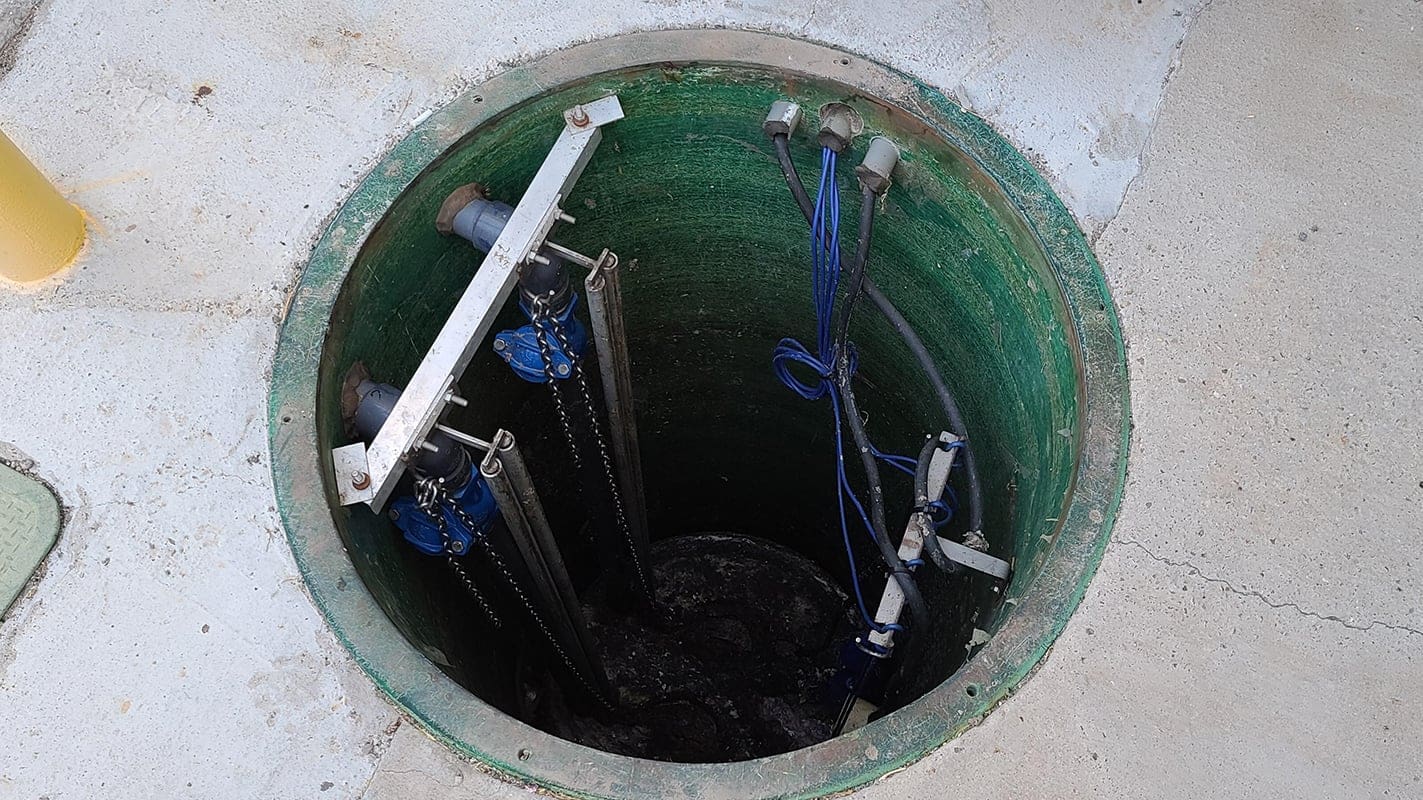
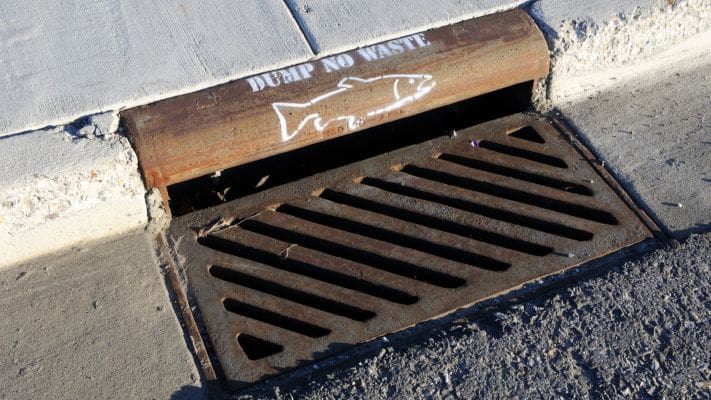
4.4.3.4 Catch Basin Cleaning
During the life of the current NPDES Permit (through June 3, 2018), the goal is to establish optimal catch basin cleaning frequencies. The City of Stamford is in the process of developing a numbering system to track catch basin maintenance. The City has over 11,000 catch basins in its MS4 system. With the exception of the Mianus River, all water bodies to which the City of Stamford’s MS4 discharges are impaired. The catch basins that are tributary to all waters except the Mianus River and its tributaries are required to follow the protocol for impaired waters. This means that for the first four years of the NPDES Permit (until June 3, 2017), catch basins would have to be inspected annually. For those tributary to the Mianus River, the catch basins must be inspected and cleaned if necessary twice within the first four years of the NPDES Permit. Catch basins will be cleaned if the sump is more than 50% full.
The following guidelines will be utilized to create standard operating procedures (SOP’s) for catch basin cleaning in accordance with the NPDES Permit. The guidelines will be based on the following information:
- Prior to about 1970, catch basins did not typically have sumps. The bottom of the catch basin is likely to be at the invert of the lowest pipe.
- From about 1970 to 2004, the standard catch basin depth was two (2) feet.
- In 2004, coinciding with the publication of the Connecticut Stormwater Quality Manual, the standard catch basin depth was increased to four (4) feet.
For areas of town in which the roads and catch basins are older (pre-2004), the catch basin needs to be cleaned if there is sediment less than one foot (1′) from the lowest invert. For newer areas in which roads and catch basins were constructed after 2004, the catch basin needs to be cleaned if there is sediment less than two feet (2′) from the nearest invert. As it is developed, the list of SOP’s, inspections, cleanings, and recommended cleaning frequency for each catch basin will be included in Appendix M.
During 2013, The City’s crews cleaned 2,024 catch basins. Many of these were cleaned in response to complaints or flooding problems. The City currently has two (2) vacuum (vac) trucks it utilizes for catch basin cleaning, in response to storm drainage complaints. In an effort to meet NPDES Permit requirements, The City has secured funding to procure two (2) new vac trucks, which are planned to be used exclusively to clean catch basins as required per the NPDES permit. The cost of the vac trucks is in excess of $400,000, each. The City has also secured funding for four (4) heavy equipment operator positions and one (1) laborer position to provide the required manpower to operate the vac trucks. When these positions are filled, the cost for manpower within the Stormwater Management Department will exceed $300,000 annually. The total number of catch basins able to be inspected and cleaned with additional equipment and manpower is unknown, but will be included in subsequent annual reports to establish a cleaning frequency.
Once the cleaning frequencies have been established, if a catch basin is found to be more than 50% full during two consecutive cleaning events, road maintenance staff will investigate the drainage area for sources of sediment loading and take appropriate measures to reduce that loading. This may include increased street sweeping, stabilization practices or drainage modifications. If the source of the sediment loading is from private property, the problem will be reported to the Regulatory Compliance and Administrative Officer for enforcement action. If these measures are unsuccessful, then the catch basin cleaning frequency must be increased as needed to keep the sump less than 50% full.
Changes in cleaning frequency will be updated in Appendix M and noted in the Annual Report.
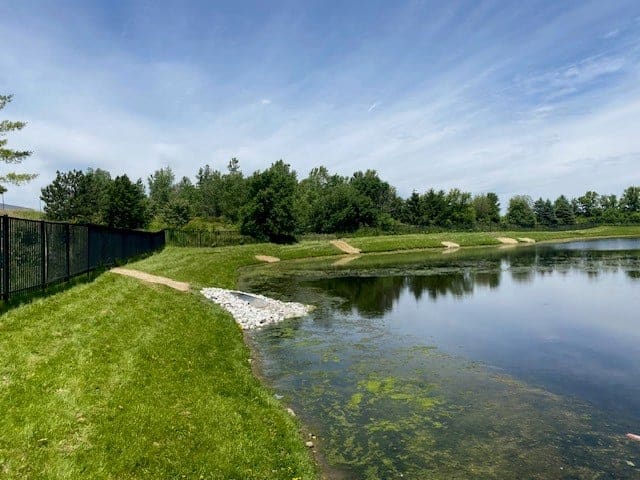
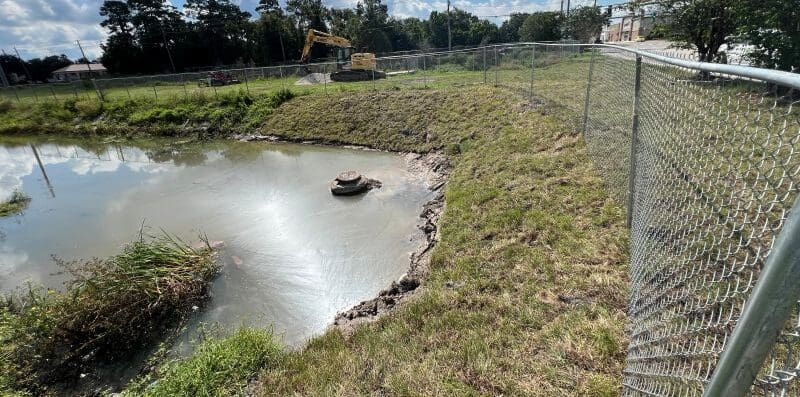
4.4.4 Detention and Retention Ponds
The City of Stamford staff is currently in the process of developing a list of detention and retention ponds that discharge to the MS4. The list of detention and retention ponds for which The City maintains an easement or legal authority is being prepared by staff from Environmental Protection Board (EPB). It is anticipated that the list of detention and retention ponds will be developed by December 1, 2014.
Once these lists are prepared, they will be maintained in Appendix N and The City will inspect these ponds annually. The first year of inspections is anticipated to be completed by July 31, 2015, which is later than required by the NPDES Permit. If they are City-owned, they will remove solids when they are found to be in excess of 50% of design capacity. If they are privately owned, the owner will be informed that the solids must be removed when they are found to be in excess of 50% of design capacity.
4.4.5 Interconnected MS4s
The City of Stamford has determined that the following municipalities and agencies may be contributing stormwater to the City of Stamford’s MS4:
- State of Connecticut (ConnDOT); a complete list of roads can be found in Appendix O
- Town of New Canaan, CT
- Town of Darien, CT
- Town of Greenwich, CT
- Town of Pound Ridge, NY
Research by City staff has revealed that no formal interagency stormwater agreements exist at this time. Though no formal agreements exist, historically ConnDOT maintains all State roads, performing paving, snow removal, and cleaning catch basins. The City of Stamford staff is currently investigating whether the previously identified municipalities have interconnected MS4s. If interconnected MS4’s are confirmed, then interagency agreements will be developed detailing responsibilities of the City of Stamford and each the interconnected MS4 municipality. If such agreements are developed, they will be included in Appendix O.
City of Stamford NPDES Permit
Permit ID: CT0030279
SECTION 1: GENERAL PROVISIONS
(A) This permit is issued in accordance with section 22a-430 of Chapter 446k, Connecticut General Statutes (“CGS”), and Regulations of Connecticut State Agencies (“RCSA”) adopted thereunder, as amended, and section 402(b) of the Clean Water Act, as amended, 33 USC 1251, et. seq., and pursuant to an approval dated September 26, 1973, by the Administrator of the United States Environmental Protection Agency for the State of Connecticut to administer an N.P.D.E.S. permit program.
(B) The City of Stamford, (“Permittee”), shall comply with all conditions of this permit inclnding the following sections of the RCSA which have been adopted pursuant to section 22a-430 of the CGS and are hereby incorporated into this permit. Your attention is especially drawn to the notification requirements of subsection (i)(2), (i)(3), (j)(1), (j)(6), 0)(8), (j)(9)(C), 0)(10)(C), (j)(11)(C), (D), (E), and (F), (k)(3) and (4) and (I)(2) of section 22a-430-3.
The NPDES Permit also requires site inspection and enforcement to assess the adequacy of the installation maintenance, operation, and repair of construction and post construction control measures. The City of Stamford’s staff performs site visits when the project is in close proximity to a wetland or other water body. Current staffing levels limit the opportunities for site inspections to only those projects with the greatest potential for impact to stormwater quality. Site visits frequently occur prior to the issuance of a Certificate of Occupancy (CO). If more staff can be hired, the number of meetings will be increased.
SECTION 6: CONDITIONS OF THIS PERMIT
(A) CONTROL MEASURES
Control Measures are required Best Management Practices (BMPs) that the Permittee must implement to reduce the discharge of pollutants from Stamford’s MS4 to the maximum extent practicable.
(3) Land Disturbance and Development
Upon issuance of this permit, unless otherwise noted, the Permittee shall implement and enforce a program to control stormwater discharges to its MS4 associated with land disturbance or development (including re-development) activities from areas with one half acre or more of soil disturbance, whether considered individually or collectively as part of a larger common plan. Such program shall include the following elements:
(i) Legal Authority
The Permittee shall, within eighteen months from the start of the Pennittee’s first fiscal year that begins after the effective date of this permit, ensure legal authority to:
- Establish an ordinance, by law, regulation, or other appropriate legal authority that requires developers and construction site operators to maintain consistency with the 2002 Guidelines for Soil Erosion and Sedimentation Control, as amended, the 2004 Connecticut Stormwater Quality Manual, as amended, and all stormwater discharge permits issued by the DEEP within the City of Stamford pursuant to CGS 22a-430 and 22a-430b. Such ordinance, bylaw, regulation, or other appropriate legal authority may include the implementation of measures in addition to the Guidelines;
- Identify existing municipal zoning, site planning, or street design regulations that address minimal dimensional criteria for the creation of roadways, parking lots, and other impervious cover that may represent barriers to implementing LID practices that involve minimization of impervious cover;
- Carry out all inspection, surveillance and monitoring procedures necessary, to determine compliance with City regulations related to the management of the MS4;
- Establish an ordinance, bylaw, regulation, or other appropriate legal authority to ensure that a developer’s or construction site operator’s proposed use of low impact development (“LID”) practices are allowable by right or exception (e.g., special permit or variance) under its regulations;
- Revise regulations necessary to eliminate or reduce potential barriers, or otherwise provide in its Annual Report(s) required by Section 8, a justification for why this schedule cannot be met and a revised schedule for implementation;
- Optimize the performance and pollutant removal efficiency of privately owned retention or detention ponds that discharge to or receive discharge from its MS4, by ensuring the performance of adequate inspection and maintenance activities;
- Control through interagency or inter-jurisdictional agreements, the contribution of pollutants between the Permittee’s MS4 and MS4s owned or operated by others.
(iv) Stormwater Management Implementation
Within three (3) years from the start of the Permittee’s first fiscal year that begins after the effective date of this permit, the Permittee shall implement, upgrade (if necessary) and enforce a program that shall address construction and post-construction stormwater discharges from land disturbing activities (construction phase) and after site stabilization has been achieved (post-construction or operational phase). At a minimum, the City’s land use regulations shall be consistent with the Connecticut Guidelines for Soil Erosion and Sedimentation Control (as amended) for construction activities and the Connecticut Stormwater Quality Manual (as amended) for post-construction stormwater management.
(v) Site Review and Inspection
Conduct site plan review and pre-construction review meetings that incorporate consideration of stormwater controls or management practices to prevent or minimize impacts to water quality; and Site inspection and enforcement to assess the adequacy of the installation, maintenance, operation, and repair of construction and post construction control measures.
To the extent any state or federal law or regulations requires the Town to establish a variance procedure for any requirement of this section 7.3, excluding section 7.3.6, the variance procedure established in Section 4.4.6(I) of the LDO shall be utilized. The provisions of section 7.3.6 shall not be subject to this requirement.
Zoning Regulations – City of Stamford, CT
SOIL EROSION, SEDIMENT CONTROL, AND STORMWATER MANAGEMENT
Stormwater Management Plan.
No activity that results in a land-disturbance activity, including development or redevelopment, resulting in one-half acre (21,780 square feet) or more of soil disturbance, whether considered individually or collectively as part of a larger common plan, shall be permitted unless a “Stormwater Management Plan” is submitted, reviewed and certified in accordance with the standards and procedures as herein defined.
A “Stormwater Management Plan shall include an “Erosion and Sediment Control Plan” with all of the required information as stated above, and the following additional information:
-
Stormwater Management Report
-
Construction Plans
- Operation and Maintenance Plan
1) Stormwater Management Report
The Stormwater Management Report shall describe how the proposed project has addressed the use of runoff reduction and Low Impact Development (LID) practices to reduce the discharge of pollutants to the maximum extent practicable to meet the goal of maintaining post-development runoff conditions similar to pre-development runoff conditions, including the following elements:
i.Project Narrative describing the project, proposed non-structural BMPs (source controls and LID site planning and design measures), proposed structural BMPs and how the development complies with Stormwater Management standards.
ii.Comparison of pre-&-post development peak flow, volume and percent difference.
iii.Discussion of efforts to protect wetlands and riparian corridors (as applicable), efforts to protect floodplains and water bodies (as applicable) and efforts to protect natural drainageways.
iv.Define the portion of the property impacted by land disturbing activities and areas to be permanently altered, including efforts to protect and retain mature trees and minimize disturbance of steep slopes (over 25%).
v.Calculation of the required Water Quality Volume to be retained.
vi.Evaluation of the Pre-Development and Post-Development Site Hydrograph, including total runoff volumes and peak flow rates for the 1, 2, 5, 10, 25, 50 and 100 year storms.
vii.Supporting calculations (as applicable) including sizing of emergency outlet, culvert capacity, gutter flow capacity, outlet protection, downstream analysis and capacity of municipal drainage structures.
viii. The Stormwater Management Report shall be sealed and signed by a Professional Engineer.
ix. In addition to the water quality measures indicated herein, hydrologic and hydraulic analysis for volume control is required for site planning and design and shall be consistent with the policies and guidelines set forth by the City of Stamford’s Engineering Bureau. These policies and guidelines are intended to augment other existing design guidance including the CT Storm water Quality Manual. These guidelines shall be implemented by professional engineers licensed to practice in the State of Connecticut. The City’s policies and guidelines may be amended to reflect new and modified technologies, practices, and regulatory requirements.
2) Construction Plans
All plans shall be black and white, no larger than 36”x48” and no smaller than 24”x36” with a maximum scale of 1” = 40’ showing the location and construction details for all structural and non-structural BMPs, sealed and signed by a Professional Engineer.
3) Operation and Maintenance Plan
Site disturbance shall not begin until the required soil erosion and sediment control measures and facilities are properly installed and functional. All required soil erosion and sediment control measures shall be maintained in an effective condition throughout the duration of the project.
Final approval and release of the performance bond shall only be granted upon final inspection and written certification that all disturbed areas have been stabilized and that final sediment control measures and stormwater management facilities have been installed in accordance with the plan. When structural measures are required, the applicant shall additionally submit an Improvement Location Survey (ILS) or Data Accumulation Plan (DAP) as prepared by a land surveyor licensed in the State of Connecticut.
In acceptance of an approval pursuant to these regulations, the owner of the property shall consent to permit the City of Stamford of its designee to enter upon the premises to inspect compliance with the approved plan and to perform all work necessary to correct and abate any violations. Enforcement of these regulations shall be the duty of the Zoning Enforcement Officer pursuant to Section 16 of the Zoning Regulations. (91-003)
View State Page
Frequently Asked Questions
What size project needs a Stormwater Management Plan in Stamford?
It depends on which threshold applies. The NPDES permit itself only covers projects with one-half acre or more of soil disturbance, but Stamford’s zoning regulations are actually stricter, requiring review for any project disturbing 10,000 square feet or more. In practice, the local zoning threshold is the one most property owners will hit first.
What has to be included in a Stamford Stormwater Management Plan?
Three components: an Erosion and Sediment Control Plan, a Stormwater Management Report, and an Operation and Maintenance Plan. The Stormwater Management Report specifically needs a project narrative, pre- and post-development flow comparisons, water quality volume calculations, and hydrograph analysis across storm events ranging from the 1-year up to the 100-year storm, all sealed by a professional engineer.
Does redeveloping an existing property in Stamford have different retention requirements than new construction?
Yes, and it depends on how much impervious cover already exists. Properties with 40% or more existing impervious cover only have to retain half the site’s water quality volume on-site, while new development and redevelopment of less-covered parcels have to retain the full water quality volume. If site constraints prevent meeting either standard, you’ll need to document why and provide additional treatment for the shortfall.
Do I need a long-term maintenance plan for my Stamford property's stormwater system?
Yes. The Operation and Maintenance Plan has to identify the system’s owner, the parties responsible for implementing maintenance, a schedule for routine and non-routine tasks, an estimated maintenance budget, and draft drainage and maintenance agreements, all sealed by a professional engineer.
What happens when I finish construction on a Stamford project?
You won’t get your performance bond released until final inspection confirms all disturbed areas are stabilized and your sediment control and stormwater facilities are installed according to the approved plan. Structural measures also require a survey from a Connecticut-licensed land surveyor to confirm as-built conditions.
Does the City of Stamford have the right to inspect my property's stormwater system?
Yes, and you consent to it by accepting plan approval. Approval under Stamford’s regulations means the property owner agrees to let the city or its designee enter the premises to inspect compliance and perform whatever work is necessary to correct violations.
Does Stamford inspect detention and retention ponds that discharge into its storm sewer system?
Yes, annually, once the city’s inventory of qualifying ponds is complete. If a pond is city-owned, solids get removed once it exceeds 50% of design capacity. If it’s privately owned, the owner gets notified directly that removal is required once that same 50% threshold is hit.
Why does Stamford's stormwater program pay so much attention to catch basins?
Because the city maintains more than 11,000 of them, and all its receiving waters except the Mianus River are already impaired. Catch basins tributary to impaired waters have to be inspected annually, and any basin gets cleaned once its sump is more than 50% full, with cleaning frequency increased further if that threshold keeps getting hit on consecutive inspections.
How can AQUALIS help my property navigate Stamford's stormwater requirements?
AQUALIS helps Stamford property owners prepare the three-part Stormwater Management Plan the city requires at the 10,000-square-foot zoning threshold, design retention systems that meet the 40%-impervious-cover distinction, and develop the Operation and Maintenance Plans and drainage agreements the city expects to see sealed by a professional engineer.
The information on this page is provided for general informational purposes only and is not legal advice. Regulations change frequently — AQUALIS makes no warranty as to the accuracy or completeness of this content, and any reliance on it is at your own risk. Consult a qualified professional or your local regulatory authority to confirm requirements applicable to your specific property.