

Last Updated 08/11/2026
Excerpt from Surface Water Management Rates Website
Surface water management rate charges are based on the number of equivalent surface units (ESUs), or 2,640 square feet of impervious surfaces. Each ESU is charged $11.31 per month. The average single-family residence is charged one ESU per month. All other properties are calculated based on the actual amount of impervious surface area.
Excerpt from Beaverton Surface Water Management Manual
Chapter 5 – Surface Water Management (SWM) and Sanitary Sewer
530.3 Erosion Prevention and Sediment Control Requirements
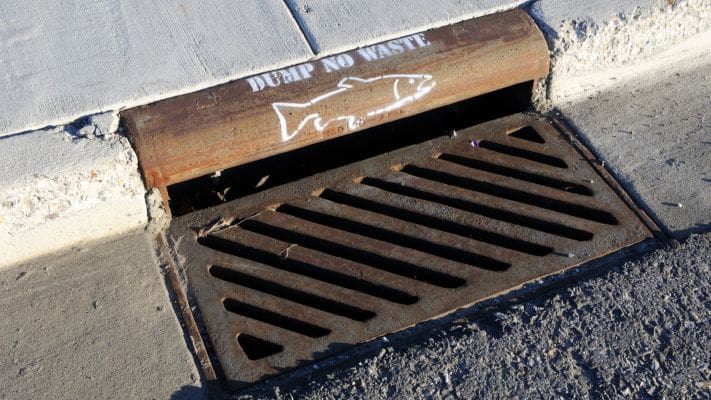
A. Inlet protection shall include both CWS inlet protection standard drawing 905 and 920 combined together.
B. CWS Dwg No. 925 (Type 6 Inlet protection) or the equivalent bio-filter bag version shown in CWS Drawing No. 915 (Type 4 inlet protection) shall NOT be used on streets with existing, on motor vehicle, pavement bike lanes or identified neighborhood bikeway routes.
C. A concrete washout location and detail shall be included in all projects involving concrete work, including
single-family residential.
1. Proposed concrete washout locations will not be placed within the existing or proposed right-of way for linear projects and are required to be located behind the curb.
D. A dewatering plan is required for all construction projects performing mass grading cut and fill activities during the defined wet weather period. All construction projects performing mass grading cut activities below the calculated water table elevation shall also include a dewatering plan during the time of plan review for approval.
1. Include a dewatering plan with the grading and erosion control plans at the time of plan review for approval.
a. Projects with unanticipated dewatering must submit revised grading and erosion control plans with a dewatering plan and receive approval prior to any work requiring the dewatering activity.
2. Dewatering plans shall show the locations of any proposed temporary storage of onsite sediment laden water and method of treatment prior to discharge.
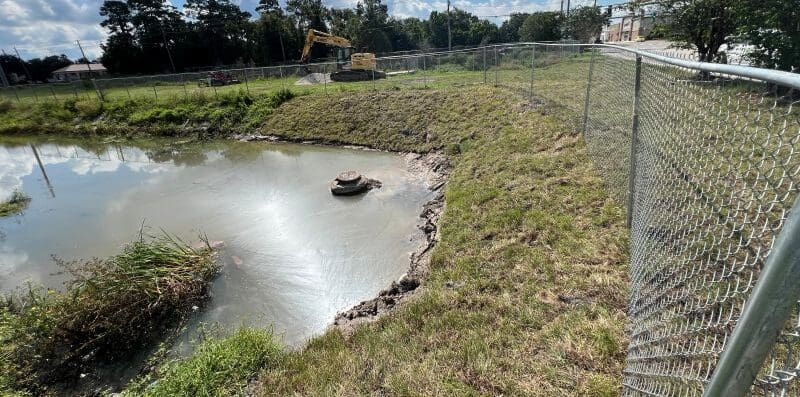
a. Temporary sediment basins shall include a 90 degree upright elbow perforated pipe wrapped in filter fabric.
b. Temporary sediment basins shall include a rock berm and use of silt curtains in-lieu of sediment fence adjacent to perforated pipe to aid in velocity reduction and settlement of fines.
c. Additional dewatering filtration treatment systems may be required to prevent sediment laden water discharges.
3. Dewatering systems must be installed and ready for operational use prior to beginning mass grading and trenching activities during site development.
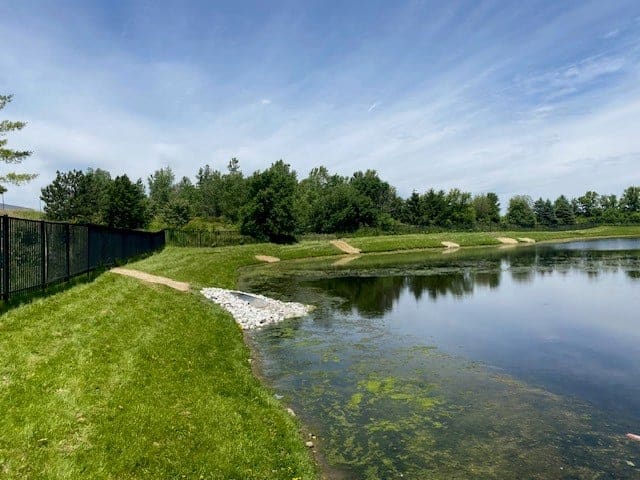
E. Once a SWM facility has been planted, it may not be used as a temporary sediment or stilling basin.
1. Future facilities that are used as sediment basins shall have all excess material removed and returned to the final grade shown on the approved plans prior to the addition of topsoil and vegetation.
F. If a site is known to have existing underground drainage systems (field tiles), they shall be shown on the Grading and Erosion Control Plan and submitted to the City for approval. If they are unexpectedly encountered during construction, the systems shall be added to the Grading and Erosion Control Plan and resubmitted to the City for approval. Impacts to the drainage patterns of adjacent properties shall be addressed according to Subsection 420.4. The systems shall either be:
1. Removed; or
2. Left in place and connected to the storm system.
a. If left in place, the design documents, including the drainage report, shall be amended to account for the additional flow that the downstream SWM facility will receive while continuing to demonstrate compliance with all applicable design standards. Record drawings shall depict all field tile connections to the public storm system.
G. Department of State Lands (DSL) and US Army Corps of Engineers (USACE) environmental permit requirements shall be integrated into the local grading and erosion control plans at the time of review. This includes the following:
1. Required stream dewatering and by-pass systems
2. Wetland removal, expansion and offsite mitigation
H. Disturbance within a Vegetated Corridor, including plant removal, enhancement, and/or any other ground disturbing activity over 500 square feet, shall be shown in the erosion control plans with sediment control BMP’s as required.
530.4.1 Oregon Drainage Law
A. Oregon drainage law, which originates from common law or case law, has developed without legislative action, and it is embodied in the decisions of the courts. Therefore, there are no Oregon Revised Statues to cite pertaining to Oregon drainage law.
B. Oregon has adopted the civil law doctrine of drainage. Under this doctrine, adjoining landowners are entitled to have the normal course of natural drainage maintained. The lower owner must accept water that naturally comes to his land from above, but he is entitled to not have the normal drainage changed or substantially increased. The lower landowner may not obstruct the runoff from the upper land if the upper landowner is properly discharging the water.
C. For a landowner to drain water onto lands of another in the State of Oregon, one of two conditions must be satisfied initially: (1) the lands must contain a natural drainage course; or, (2) the landowner must have acquired the right of drainage supported by valuable consideration (i.e. a purchased drainage easement).
In addition, because Oregon has adopted the civil law doctrine of drainage, the following three basic elements must be followed.
1. A landowner may not divert water onto adjoining land that would not otherwise have flowed there. “Divert water” includes but is not necessarily limited to:
a. water diverted from one drainage area to another, and,
b. water collected and discharged which normally would infiltrate into the ground, pond, and/or evaporate.
2. The upper landowner may not change the place where the water flows onto the lower owner’s land. (Most of the diversions not in compliance with this element result from grading and paving work and/or improvements to water collection systems.)
3. The upper landowner may not accumulate a large quantity of water, then release it, greatly accelerating the flow onto the lower owner’s land. This does not mean that the upper landowner cannot accelerate the water at all; experience has found the drainage to be improper only when the acceleration and concentration were substantially increased.
D. Subsurface waters which percolate to the surface can be intercepted and diverted for the protection of the highway without regard for the loss of these waters to the adjacent landowners. In those cases where wells and springs are involved, the right-of-way agent should contact the affected owner(s) to prevent any misunderstanding over damage that could be claimed.
E. Drainage designs should satisfy Oregon drainage law to avoid claims or litigation resulting from improper drainage design. When it is apparent that the drainage design will not satisfy the law, then drainage easements should be obtained from the affected property owners. The legal staff should be consulted in those situations that appear to be unique and could result in litigation.
F. Where certain drainage patterns have been established over long periods of time (i.e. in excess of at least 10 years), that are not the original natural drainage, there may be legal rights acquired which allow the continuance of the altered drainage pattern. Again, legal staff should be consulted in such situations.
View State Page
Frequently Asked Questions
Am I responsible for maintaining stormwater facilities after construction in Beaverton?
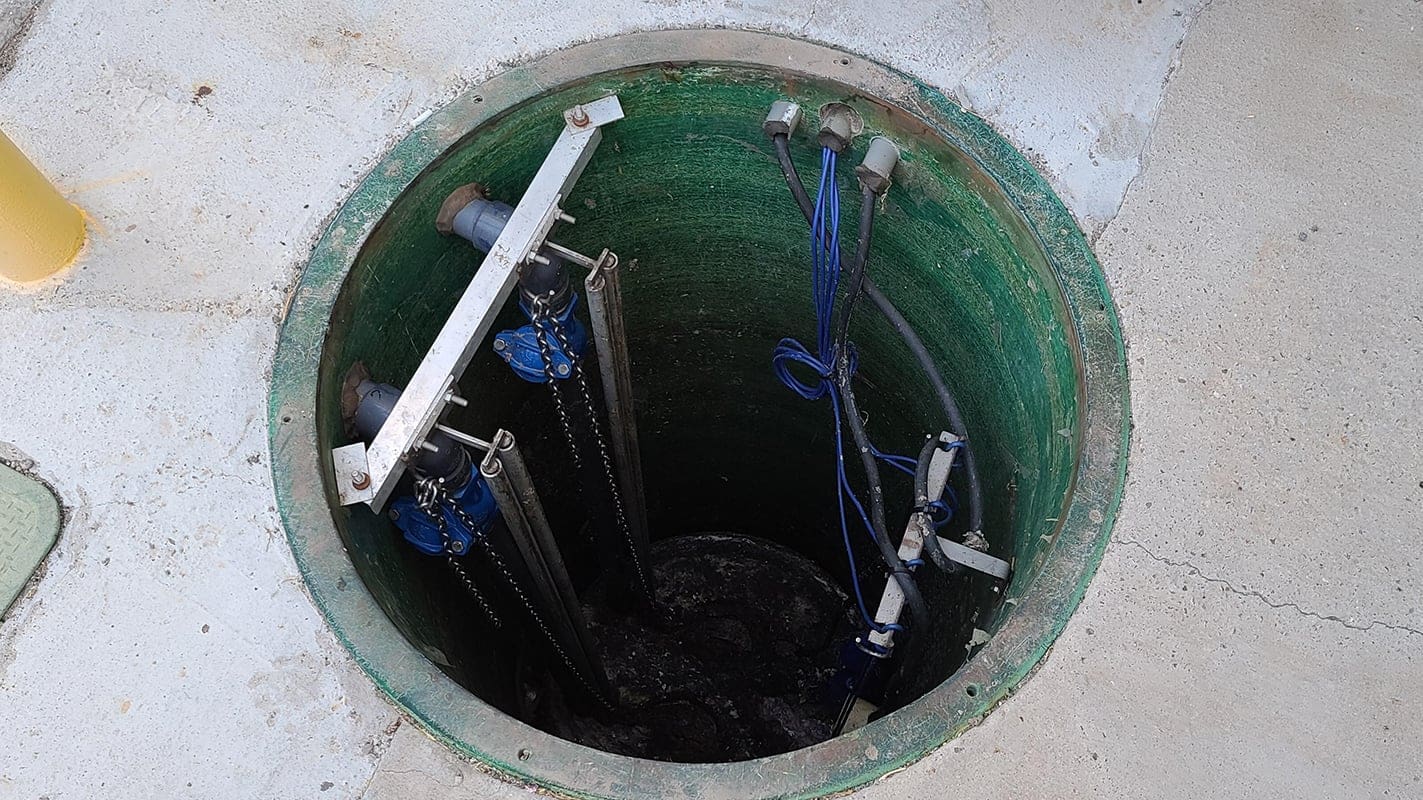
Yes. As the property owner, you’re responsible for maintaining all on-site stormwater control facilities and any open space areas required by your approved stormwater control plan, along with any other stormwater facilities or practices located on your property. AQUALIS can help property owners in Beaverton, Oregon build a maintenance routine that meets this ongoing obligation.
Can the City of Beaverton inspect my stormwater facilities after construction?
Yes. Under the NPDES program, the city has the authority to inspect properties for noncompliance and can issue a notice of violation for any deficiency found on-site, including confirming that your stormwater facilities are being properly maintained and are functioning as designed.
The information on this page is provided for general informational purposes only and is not legal advice. Regulations change frequently — AQUALIS makes no warranty as to the accuracy or completeness of this content, and any reliance on it is at your own risk. Consult a qualified professional or your local regulatory authority to confirm requirements applicable to your specific property.