

Last Updated XX/XX/XXXX
Overview of Alexandria, VA Stormwater Regulations
Municipal Separate Storm Sewer System (MS4) Stormwater Program Plan
Under the Virginia Stormwater Management Program (VSMP) permit regulations, the City of Alexandria is required to control stormwater pollution to the maximum extent practicable and to develop a pollution prevention plan – known as a Municipal Separate Storm Sewer System (MS4) Program Plan. The City’s initial plan was developed in 2003, was revised in 2008 and revised again in 2014 to reflect changes to the City’s latest state permit. The permit contains Six Minimum Control Measures (MCMs). The City has developed appropriate and effective Best Management Practices (BMPs) to control stormwater pollution to the maximum extent practicable.
The MS4 Program Plan contains the BMPs that address the MCMs, which are discussed in some detail.
Post-Construction Stormwater Management Regulations
Post-construction runoff control in areas that have undergone development or redevelopment is necessary because runoff from these areas has been shown to significantly impact receiving streams.
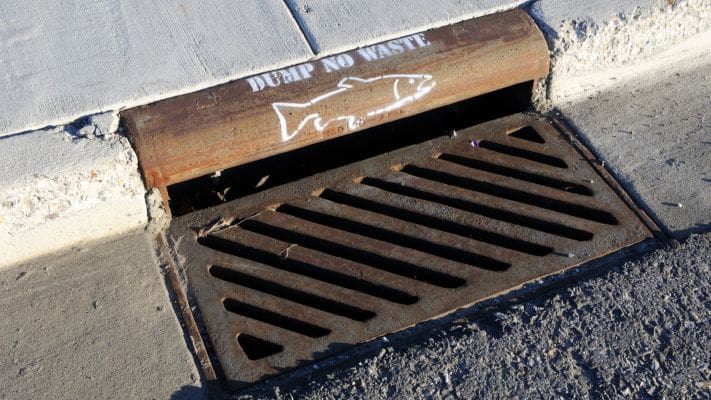
Stormwater management regulations are designed to reduce pollution from development. As runoff flows over areas altered by development, it picks up harmful sediment and chemicals such as oil and grease, pesticides, heavy metals, and nutrients (e.g., nitrogen and phosphorus). These pollutants often become suspended in runoff and are carried to streams. In addition, areas undergoing development or redevelopment often result in increased impervious surfaces. Impervious surfaces, such as roofs, parking lots, and roads, increase the quantity of runoff generated by preventing water from filtering through vegetation and soil. This can result in stream bank erosion and downstream flooding, which often lead to a loss of aquatic life and damage to property.
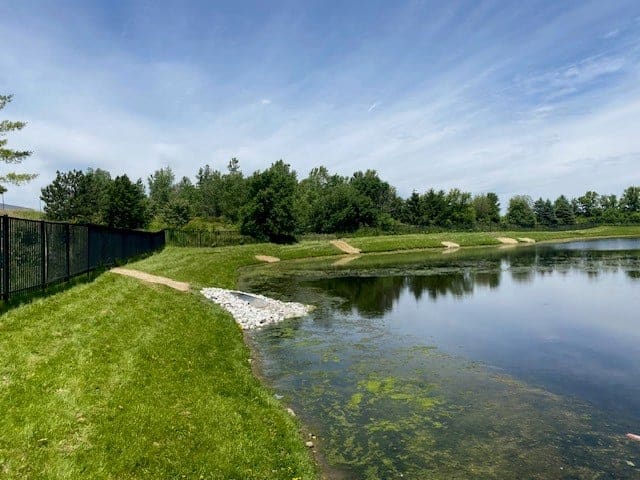
The City has long required that development and redevelopment projects implement stormwater facility Best Management Practices (BMPs) to minimize the increase of pollutants and runoff to the City’s streams. Examples of BMPs and stormwater controls include stormwater wet/dry detention ponds, vegetative buffers, bioretention areas, hydrodynamic structures, sand filters, cluster development to retain open space, and design standards that promote stream buffers and reduce impervious surfaces. The City also encourages a “tool box” approach to stormwater quality when site conditions and circumstances permit. This approach includes stream restoration, vegetated buffer enhancement, and constructing green roofs.
Maintenance Requirements for Property Owners
Ongoing maintenance of BMPs is required to ensure that they continue to function as designed. Detention ponds lose capacity as sediment and pollutants are captured and accumulate in the pond. Sand filters can clog with sediment, oil, and organic matter such as leaves and lawn clippings. Bioretention areas can lose their capacity to infiltrate stormwater. After a development is complete, the responsibility for maintenance is passed on to the owners of the development through the BMP Maintenance agreement. Frequently, the owners, be it a business or homeowners association, are unaware of their obligation to provide maintenance and/or unaware of the proper procedures to inspect and maintain BMPs. The City can assist in helping BMP owners / operators understand their maintenance obligations and can provide technical guidance for inspecting and maintaining BMPs.
BMP maintenance is VITAL to the proper functioning of each BMP and failure to properly maintain BMPs can even degrade water quality further. Failure to properly maintain BMPs can result in fines of up to $32,500 per day per violation. It is very important that property owners understand their obligations for the maintenance and inspection of BMPs.
Excerpt from Alexandria Municipal Code
Article 13- Environmental management
13-114 - Stormwater management plan
(A) The stormwater management plan must apply the stormwater technical requirements of section 13-109 to the entire site. Individual lots in a new residential, commercial, or industrial development or sale, including those developed under subsequent owners, shall not be considered separate land-disturbing activities. Instead, the common plan, as a whole, shall be considered to be a single land-disturbing activity. The plan shall consider all sources of surface runoff and all sources of subsurface and groundwater flows converted to surface runoff. The plan shall contain maps, charts, graphs, tables, photographs, narrative descriptions, explanations, calculations, and citations to supporting references as appropriate to communicate the information required by this Article XIII. At a minimum, the stormwater management plan must contain the following:
(1) Information on the type and location of stormwater discharges; information on the features to which stormwater is being discharged including surface waters, and the pre-development and post-development drainage areas;
(2) Contact information including the name, address, and telephone number of the owner and the tax reference and parcel number of the property or properties affected;
(3) A narrative that includes a description of current site conditions and final site conditions;
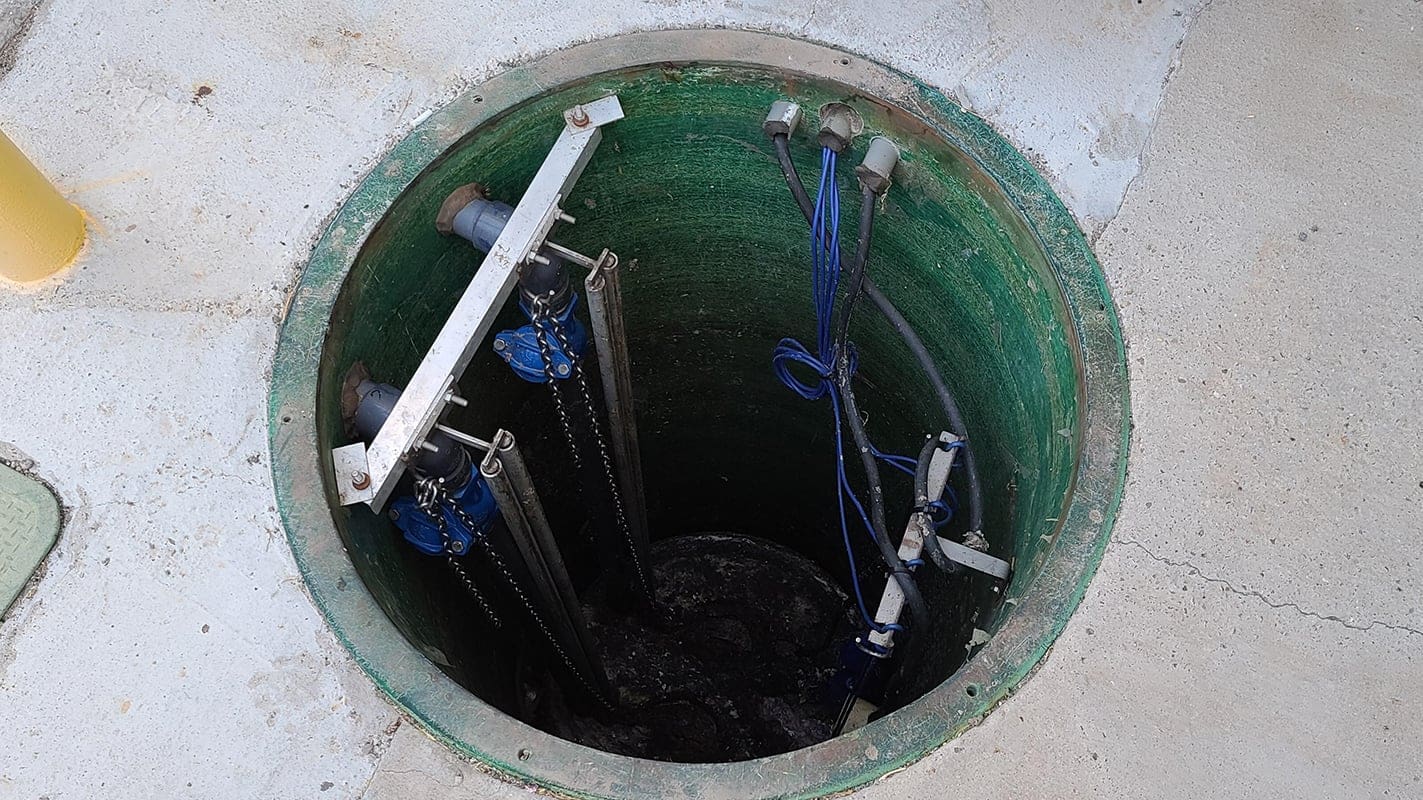
(4) A general description of the proposed stormwater management facilities and a maintenance agreement and inspection schedule in accordance with section 13-109(G) to ensure that the facilities will be operated and maintained after construction is complete;
(5) Information on the proposed stormwater management facilities, including:
(a) The type of facilities;
(b) Location, including geographic coordinates;
(c) Acres treated; and
(d) The surface waters into which the facility will discharge.
(6) Hydrologic and hydraulic computations, including runoff characteristics.
(7) Documentation and calculations verifying compliance with the water quality and water quantity requirements of section 13-109.
(8) A map or maps of the site that depicts the topography of the site and includes:
(a) All contributing drainage areas;
(b) Existing streams, ponds, culverts, ditches, wetlands, other water bodies, and floodplains;
(c) Soil types, relevant geological formations, forest cover, and other vegetative areas;
(d) Current land use including existing structures, roads, and locations of known utilities and easements;
(e) Sufficient information on adjoining parcels to assess the impacts of stormwater from the site on these parcels;
(f) The limits of clearing and grading, and the proposed drainage patterns on the site;
(g) Proposed buildings, roads, parking areas, utilities, and stormwater management facilities; and
(h) Proposed land use with tabulation of the percentage of surface area to be adapted to various uses, including, but not limited to, planned locations of utilities, roads, and easements.
(i) The delineation of buildable area.
(B) If an operator intends to meet the water quality requirements set forth in section 13-109(E) through the use of off-site credits in accordance with section 13-109(E)(8), then a letter of availability from the off-site provider must be included. Approved off-site options must achieve the necessary reductions prior to the commencement of the applicant’s land-disturbing activity except as otherwise allowed by Section 62.1-44.15:35 of the Code of Virginia.
(C) If the operator intends to utilize the alternative stormwater management equivalency options in section 13-110 to meet the Alexandria water quality volume default in section 13-109(E)(6) or the additional water quality performance criteria of section 13-109(E)(8), then the operator must submit a narrative and any required calculations.
(D) Site specific facilities for phased projects shall be designed for the ultimate development of the contributing project watershed based on zoning, comprehensive plans, local public facility master plans, or other similar planning documents.
(E) Elements of stormwater management plans that include activities regulated under Chapter 4 of Title 54.1 of the Code of Virginia be appropriately sealed and signed by professional registered in the Commonwealth of Virginia and performed in accordance with procedures, consistent with good engineering practice, established by the director of T&ES pursuant to section 13-104(C).
(F) All stormwater designs that require analysis of pressure hydraulic systems and/or inclusion and design of flow control structures must be sealed by a professional engineer registered in the Commonwealth of Virginia.
(G) An as-built drawing for permanent stormwater management facilities shall be submitted to the director of T&ES in accordance with section 13-114. The as-built drawing shall be appropriately sealed and signed by a professional registered in the Commonwealth of Virginia certifying that the stormwater facilities have been constructed in accordance with the approved plan.
(H) The plan shall establish a long-term schedule for inspection and maintenance of stormwater management facilities that includes all maintenance requirements and persons responsible for performing maintenance. If the designated maintenance responsibility is with a party other than the City of Alexandria, then a maintenance agreement shall be executed between the responsible party and the city in accordance with section 13-109(G).
View State Page
Frequently Asked Questions
What is stormwater compliance in the City of Alexandria?
Stormwater compliance in Alexandria means following the City’s requirements under its Virginia Stormwater Management Program (VSMP) permit, which requires the City to control stormwater pollution to the maximum extent practicable. For property owners, this means implementing and maintaining stormwater best management practices (BMPs) required as conditions of any development or redevelopment approval.
When rain flows over developed surfaces like rooftops, parking lots, and roads, it picks up sediment, oil and grease, pesticides, heavy metals, and nutrients like nitrogen and phosphorus. These pollutants are carried directly into Alexandria’s streams. The City’s stormwater program is designed to reduce that pollution through development standards, BMP requirements, and ongoing maintenance obligations placed on property owners.
Who is responsible for BMP maintenance in Alexandria?
Once a development project is complete, responsibility for maintaining all stormwater BMPs on the property passes to the property owner through a BMP Maintenance Agreement. This applies to commercial properties, multifamily developments, and homeowners associations alike.
In practice, many property owners and associations are unaware that this obligation exists, or are unsure how to inspect and maintain their BMPs properly. The City can provide technical guidance, but the legal responsibility for maintenance rests with the property owner. AQUALIS can manage your BMP maintenance program, conduct inspections, and keep your records current so you stay in compliance with your maintenance agreement.
What are the penalties for failing to maintain stormwater BMPs in Alexandria?
Failure to properly maintain stormwater BMPs in Alexandria can result in fines of up to $32,500 per day per violation. Each day that a BMP is not being maintained in compliance with the City’s requirements is treated as a separate violation.
Beyond the financial penalties, improperly maintained BMPs can actually make stormwater quality worse rather than better. Detention ponds that have filled with sediment, sand filters clogged with organic material, and bioretention areas that can no longer infiltrate water do not just stop working — they can become active sources of pollution. The City considers BMP maintenance vital to the proper functioning of Alexandria’s stormwater system, and enforcement reflects that priority.
How do I know if my Alexandria stormwater system is at risk of failure or safety violation?
Watch for these warning signs.
You are unaware of your BMP Maintenance Agreement. If your property was developed or redeveloped at any point and you are not sure whether a BMP Maintenance Agreement was recorded, that gap needs to be resolved. The agreement defines your maintenance obligations and is tied to the property through ownership changes.
Your detention pond has visible sediment buildup. Ponds capture sediment and pollutants over time and lose storage capacity as a result. A pond that is shallower than it was when originally constructed, or that has extensive vegetation growing in what should be open water, is likely overdue for maintenance.
Your sand filter is draining slowly or not at all. Sand filters clog with sediment, oil, and organic matter. A filter that takes significantly longer to drain after a storm than it did when new is not meeting its design performance and needs to be inspected and serviced.
Your bioretention area is ponding water for extended periods. Bioretention areas are designed to infiltrate stormwater within a defined timeframe. Prolonged ponding suggests the soil media has compacted or clogged and is no longer functioning as designed.
You have not had a BMP inspection recently. Given the $32,500 per day per violation penalty, proactive inspections are far less expensive than enforcement action. If you are unsure when your BMPs were last inspected or maintained, AQUALIS can assess their current condition and bring your maintenance program up to date.
The information on this page is provided for general informational purposes only and is not legal advice. Regulations change frequently — AQUALIS makes no warranty as to the accuracy or completeness of this content, and any reliance on it is at your own risk. Consult a qualified professional or your local regulatory authority to confirm requirements applicable to your specific property.